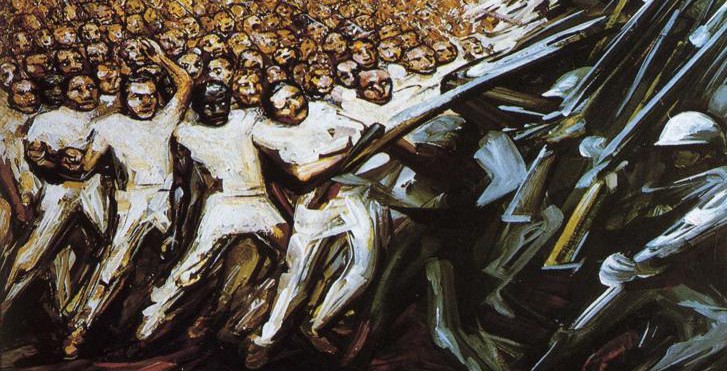
The end of American Democracy?

by Henry A. Giroux “For we already know that a worthwhile society will not be less but more free than our own. More instruction, more — and more precise — information, more concrete criticism, publicity given to the actual functioning of society and politics, all problems put in the most offensive terms — as offensive as suffering and as all true reasoning — here are the preliminary conditions for ‘transparent’ social relations.” — Merleau Ponty “It is certain, in any case, that ignorance, allied with power, is the most ferocious enemy justice can have.” — James Baldwin Four decades of … Continue reading The end of American Democracy?
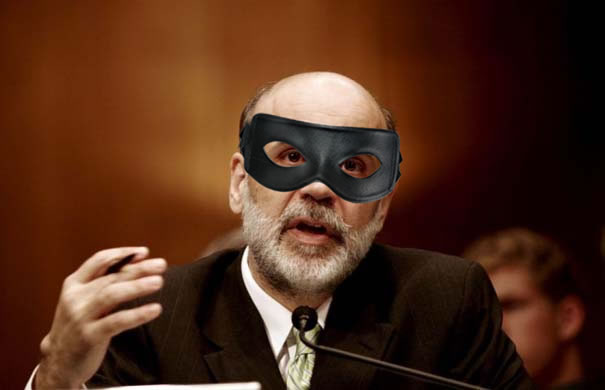
Redesigning money for well-being and happiness

by Mark Anielski “One must make a new system that makes the old system obsolete.” — Buckminster Fuller The greatest threat to the pursuit of genuine happiness and well-being is our current debt-money system. In the face of an international debt-crisis, it is remarkable that there is no serious discussion about the nature of money, or about how, and who creates our money. While meaningful conversations about alternative measures of progress (e.g. Gross National Happiness, Genuine Progress Indicators) are now under way, these efforts will ultimately fail without understanding that the current debt-based money system must be fundamentally restructured. The … Continue reading Redesigning money for well-being and happiness

The teachers strike: An emerging revolutionary ideal

by Henry A. Giroux What the world is witnessing in Chicago as thousands of teachers, staff and support personnel strike is the emergence of a revolutionary ideal. This is an ideal rooted in the promise of democracy — one that challenges corrupt neo-liberal practices, such as giving corporations and markets the right to define the purpose and meaning of public education; opposes policies that systemically defund public education by shifting the burden of low tax rates for the rich, and the cost of bloated military expenditures, to teachers and other public servants; and refuses to support educational reforms that help … Continue reading The teachers strike: An emerging revolutionary ideal

Nightfall: Dimming of the dream and search for an alternative

by P. J. Laska Given the emphasis on imposing hegemony by military means, it is a splendid irony that ‘American Way of Life’ should share its acronym (AWOL) with the military term “Absent Without Leave.” — http://www.laetusinpraesens.org Ronald Reagan in the famous “Morning-in-America” speech that was part of his 1984 re-election campaign took credit for the improvement of the economy since his election in 1980.  By 1983 the inflationary spiral of the 70’s had been brought under control by Federal Reserve chairman Paul Volker, who was originally appointed by Carter and then reappointed by Reagan in 1983.  Reagan could also … Continue reading Nightfall: Dimming of the dream and search for an alternative

Protest and power: The radical imagination

by Henry A. Giroux “This isn’t a student strike, it’s the awakening of society.” — Quebec protest banner In many countries throughout the world, young people are speaking out.[1]  They are using their voices and bodies to redefine the boundaries of the possible and to protest the crushing currents of neoliberal regimes that ruthlessly assert their power and policies through appeals to destiny, political theology, and the unabashed certainty bred of fundamentalist faith. From Paris, Athens, and London to Montreal and New York City, young people are challenging the current repressive historical conjuncture by rejecting its dominant premises and practices. … Continue reading Protest and power: The radical imagination

Getting serious about politics

by Zoltan Zigedy Economic relations clarify politics just as politics can return the favor. In truth, it is impossible to fully understand one without an understanding of the other, and especially without a grasp of their inter-relationship. No doubt that explains the wisdom of the classical economists (and Marx and Engels) in describing their studies as “political economy.” Similarly, the failure to systematically integrate the two social domains explains the frustration of the modern-day academic economists, even Nobel laureates, who fume about the politicians standing in the way of their ready solutions to the current global economic crisis. A case … Continue reading Getting serious about politics

Towards a post-Occupy world

by Richard J. White Running deeply through radical critiques that have emerged across dissident academic, activist and public communities — critiques that have pricked the mainstream consciousness through their repeated denouncement of both the legitimacy and the desirability of the current orthodox economic and political system — is the spirit of Ya Basta! (‘Enough! Now for something else!’). As Wight (2012: 161) argued: One thing is clear, irrespective of how it will all end, the Arab Spring, looting in London, riots in Greece, wars across the Middle East and beyond, the Global Financial Crisis (GFC), and the Occupy Movement are … Continue reading Towards a post-Occupy world

Anarchism in the academy

by Jeff Shantz Anarchist academic David Graeber devotes the first section of his book Fragments of an Anarchist Anthropology to his attempt to answer the question, “Why are there so few anarchists in the academy?”  For Graeber this is a pressing question given the veritable explosion of anarchist theory and lively debates over anarchism outside of the academy, especially within the numerous social movements which have emerged recently.  Despite the blossoming of anarchist thought and practice, David Graeber is perplexed that this flowering of anarchism has found little reflection in the academy.  Graeber seems to long for the type of … Continue reading Anarchism in the academy

Zombie functionalism and the return of neo-instrumentality in education

by Danny Weil For decades now, the debate in America over education has swerved back and forth between student testing, teacher accountability, standards, competitiveness and what curriculum should contain. With No Child Left Behind ushered in at the beginning of the George W. Bush presidency, America entered into the cartographic reality and morbid morass of high stakes testing, the location on the chess board where the Wall Street financiers and seedy politicians wanted to put public school education after years of neglect and underfunding.  Why?  For not only is the attack on public education one aimed at destroying teacher unions … Continue reading Zombie functionalism and the return of neo-instrumentality in education