

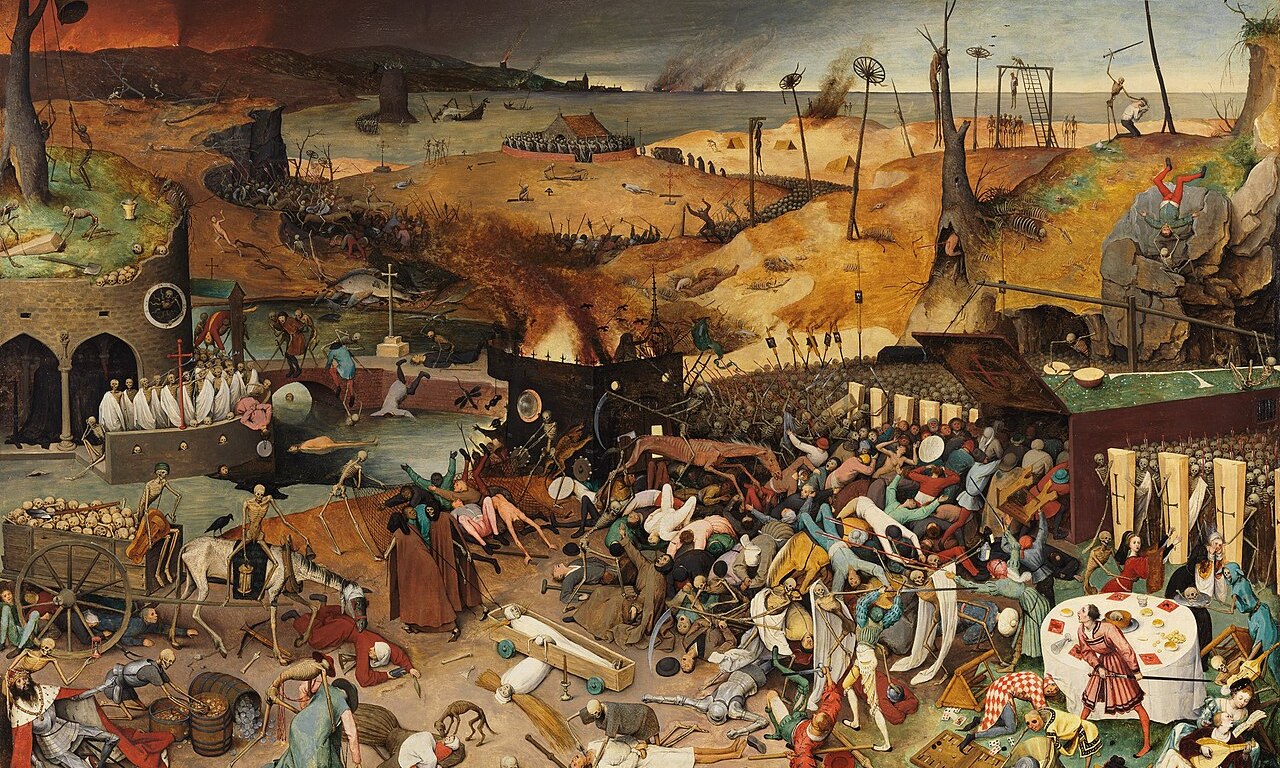

Then saith he unto them, Render therefore unto Caesar the things which are Caesar’s; and unto God the things that are God’s.—Matthew, 22:21
The mosques are our barracks, the domes our helmets, the minarets our bayonets and the faithful our soldiers…—Recep Tayyip Erdoğan, Turkish President
by Sanjay Perera
HUNGARY has fallen. And a third assassination attempt was made on US President Donald Trump. The suspect, a Californian, is in custody. In Britain, yet another violent antisemitic attack confirms its status as a fallen state. And in Australia, an unprovoked stabbing of a paramedic, and churches continue to be burnt down in the West; these are symptomatic of the times. The defeat of Hungary’s Viktor Orbán at the polls has led to the rise of a new government that signals it will leap into the arms of the EU and spend billions to support Ukraine’s endless war with Russia. Hungary will soon reverse its policy on mass immigration, and allow countless to climb the walls into its cities as it will become subservient to the European Convention on Human Rights (ECHR). This is the way the West ends, not with a bang but the whimpering death of Reason: and the catastrophe that ensues. In this context, the American and Israeli conflict with Iran is symptomatic of the imbroglio in the West over its identity and destiny. It is a struggle Europe and others have brought upon themselves by allowing untrammelled illegal immigration particularly of those whose values are opposed to those of the West. Indeed, it now appears that large immigrant flows of a specific community are proving to be a direct threat to the well-being of the West; a scenario difficult to imagine a generation ago. The recent film Nuremberg based on the memorable inaugural Nuremberg trial (1945-46) of members of the Nazi High Command provides an object lesson, but its value and what it teaches has yet to be understood. The focus of the film is Hitler’s second-in-command Hermann Göring who was charged and found guilty of conspiracy to commit crimes, crimes against peace, war crimes, and crimes against humanity; he and 11 others were sentenced to death by a tribunal of four judges from the US, UK, France and the USSR.
Göring’s primary defence was that he obeyed orders and was not complicit in the atrocities of war; he claimed ignorance of what occurred in the concentration camps: specifically, the mass murder of Jews. Documents produced by the prosecutors disclosed his instructions to key officers who carried out the programme of mass extermination of Jews, but he evaded responsibility by exploiting the ambiguity of the language in the papers, and that no direct order was given to kill anyone: nor were any such orders insinuated. Films were shown depicting the horrors of the camps to the court and the defendants but Göring asserted that atrocities occur in war; Germany’s were no worse than those of Allied forces. Ultimately, when asked if after all that was cited and shown would he still have followed Hitler and carried out his orders: his reply was in the affirmative; in the film this seemed to be the primary cause for his conviction.
They have so identified themselves with the philosophies they conceived and with the forces they have directed that any tenderness to them is a victory and an encouragement to all the evils which are attached to their names. Civilization can afford no compromise with social forces that would gain renewed strength if we deal ambiguously or indecisively with the men in whom these forces precariously survive.
Robert H. Jackson, opening statement at the International Military Tribunal: Nuremberg, Germany, 21st November 1945
America’s Robert Jackson who served in the Supreme Court was appointed the chief prosecutor of the Nazi war criminals at the first International Military Tribunal. While he was crticised for his performance in the trial Jackson gave an unforgettable opening statement of indictment placing the responsibility for what occurred in the war upon the individuals of the Nazi leadership:
The privilege of opening the first trial in history for crimes against the peace of the world imposes a grave responsibility. The wrongs which we seek to condemn and punish have been so calculated, so malignant, and so devastating, that civilization cannot tolerate their being ignored, because it cannot survive their being repeated. That four great nations, flushed with victory and stung with injury stay the hand of vengeance and voluntarily submit their captive enemies to the judgment of the law is one of the most significant tributes that Power has ever paid to Reason.
What is important, and often missed, is the mention of Reason; the subordination of Power to Reason. And equally striking is that in our time, Jackson’s further comments are applicable to ideologies and doctrines of violence masked as religion:
What makes this inquest significant is that these prisoners represent sinister influences that will lurk in the world long after their bodies have returned to dust. We will show them to be the living symbols of racial hatreds, terrorism and of violence, and of the arrogance and cruelty of power. They are the symbols of fierce nationalisms and militarism, of intrigue and warmaking which have embroiled Europe generation after generation, crushing its manhood, destroying its homes, and impoverishing its life.
Public Reason
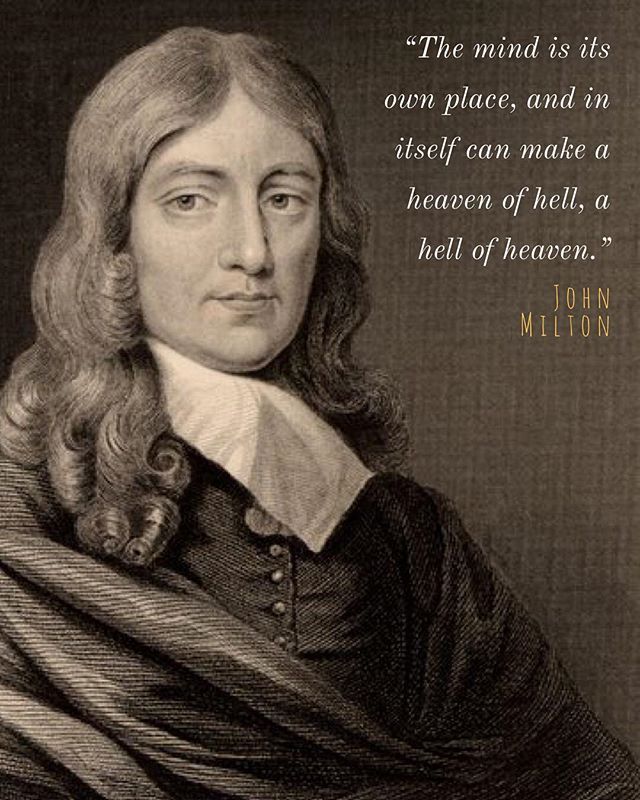
The ability to question, think through matters systematically, and come to reasoned conclusions was advocated by England’s great poet, polemicist, and man of letters John Milton (1608-74). In one his most influential works cited even in our era, Areopagitica (1644), Milton pushed against the government’s Licensing Order of 1643 arguing against pre-publication censorship. His focus was on the requirement for governmental approval of texts before publication; he insisted that such censorship prevented the pursuit of truth and knowledge by requiring officials to approve what people had access to. This not only encouraged public dependence on the state, but it also removed the choice people had in deciding what to accept or reject. It went against what God bestowed on mankind: free will, the use of Reason, the gift of conscience.
Additionally, for Milton such political interference in the quest for learning and limiting those who could share useful ideas not only prevented acquisition of knowledge but weakened intellectual rigour, discernment, the vital need to be able to detect what is harmful; it mollycoddled the public into being susceptible to false ideas as they will have to be told what is good for them and what is not every time. It will finally vitiate moral judgement. However, he states that sanctions can be imposed on works after publication if they prove libellous, genuinely harmful or incite injury. But the promotion of clear reasoning and the importance of public debate has had a lasting impact on the system of western democratic governance.
In yet another notable work, Defensio Secunda of 1654 (“Second Defense of the English People”), Milton exhorts his countrymen to stay the course in creating a republic as opposed to a monarchical system of government. He urged not only reform at many levels but a system based on merit as opposed to the privileges of status; a system of parliamentary democracy: though his views evolved to having a government of the wise, virtuous and educated than a system of populism. Crucially, he called for devotion to the public good, intellectual liberty, active debate of important issues, promotion of education: all founded upon the cornerstone of rationality and free will as endowed by the Divine. He was a proponent of the right to resist tyranny in any form of government by those possessed of moral autonomy which was open to all but had to be exercised willingly in order to reject coercion, vacuous obedience, submission. Unsurprisingly, his ideas of Republicanism inspired some of America’s founding fathers particularly the notion that humanity is imbued with the desire for freedom, to be unshackled from restrictive ideas, and a polity that fostered human dignity.
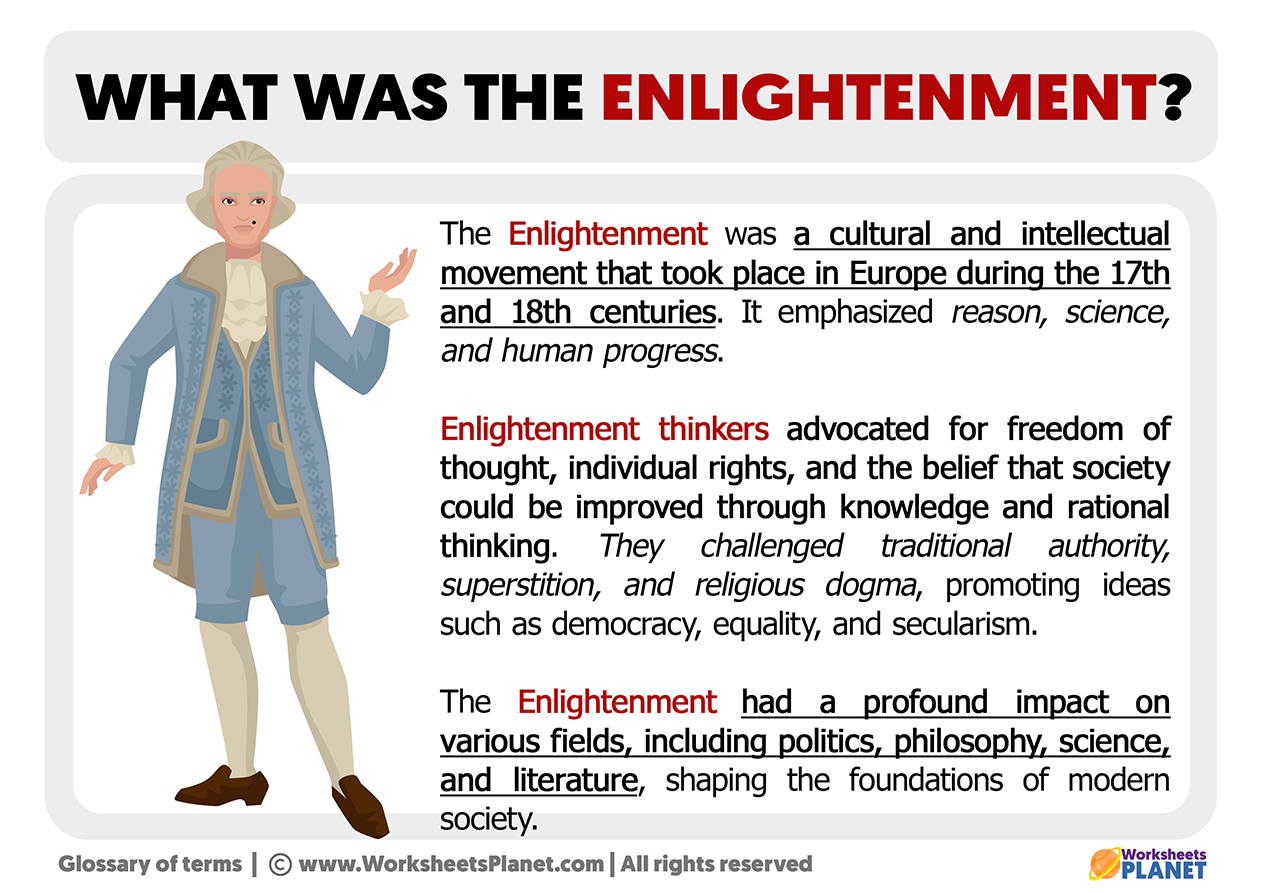
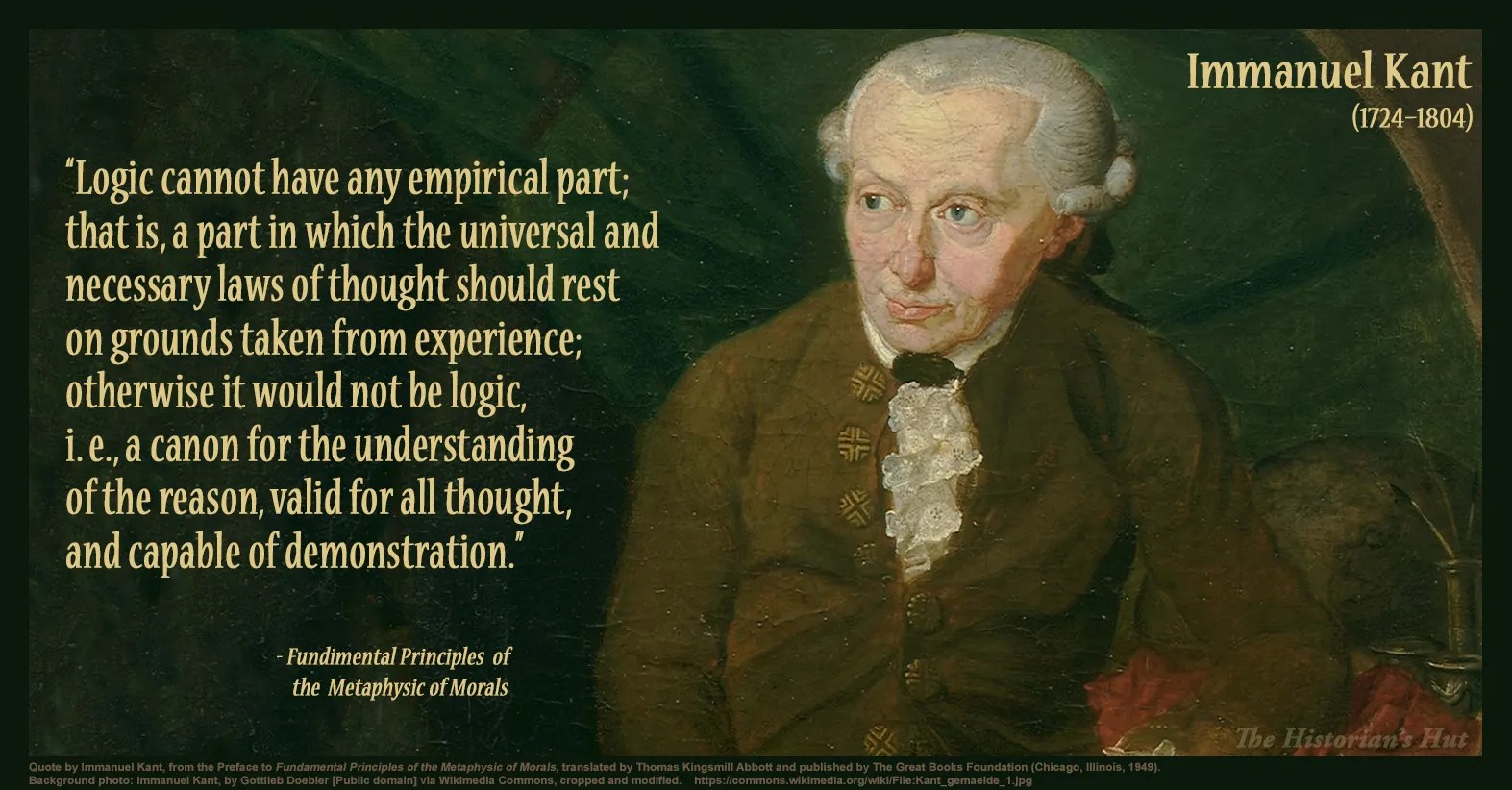
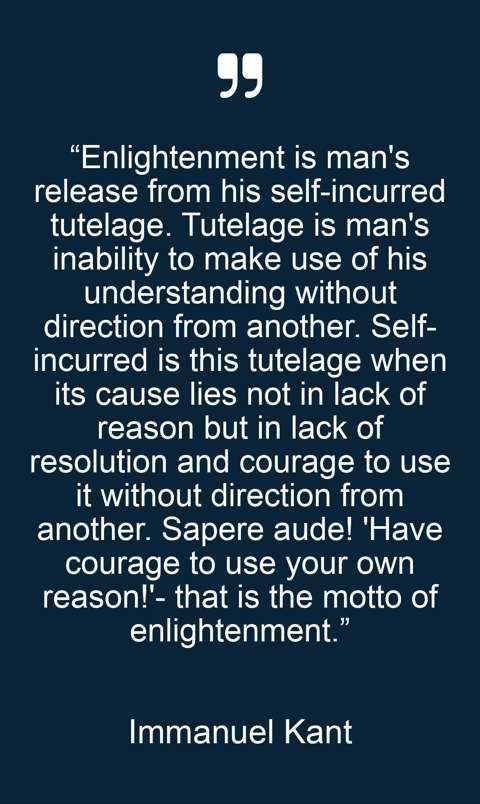
Not long after Milton the European Age of Enlightenment began. Much of what Milton proposed proved to be a precursor to the zeitgeist that ensued. An age that promoted the value and autonomy of the individual, limited government raised on constitutional authority, greater democratic participation and debate, the advancement of scientific thought, burgeoning notions of free enterprise, the primacy of rationality; it also witnessed the turn towards critical philosophy as exemplified by legendary German philosopher Immanuel Kant (1724-1804). After his groundbreaking Critique of Pure Reason of 1781, Kant produced yet another impactful work “An Answer to the Question: What is Enlightenment?” (1784). However, within the milieu of the Enlightenment Kant in his renowned essay highlighted the individual’s intellectual and moral autonomy wherein a person is able to make decisions, sophisticated moves in thoughts, word and deed reflecting what is right. As Kant writes[1]:
Enlightenment is the human being’s emancipation from its self-incurred immaturity. Immaturity is the inability to make use of one’s intellect without the direction of another. This immaturity is self-incurred when its cause does not lie in a lack of intellect, but rather in a lack of resolve and courage to make use of one’s intellect without the direction of another. ‘Sapere aude! Have the courage to make use of your own intellect!’, is hence the motto of enlightenment.
Kant is emphasising the freedom of will and choice as each one has to use their minds the correct way, independently, free from the immaturity (beyond that of youth) of allowing themselves to succumb to brainwashing: having the audacity to think for ourselves despite the herd instinct towards conformism.
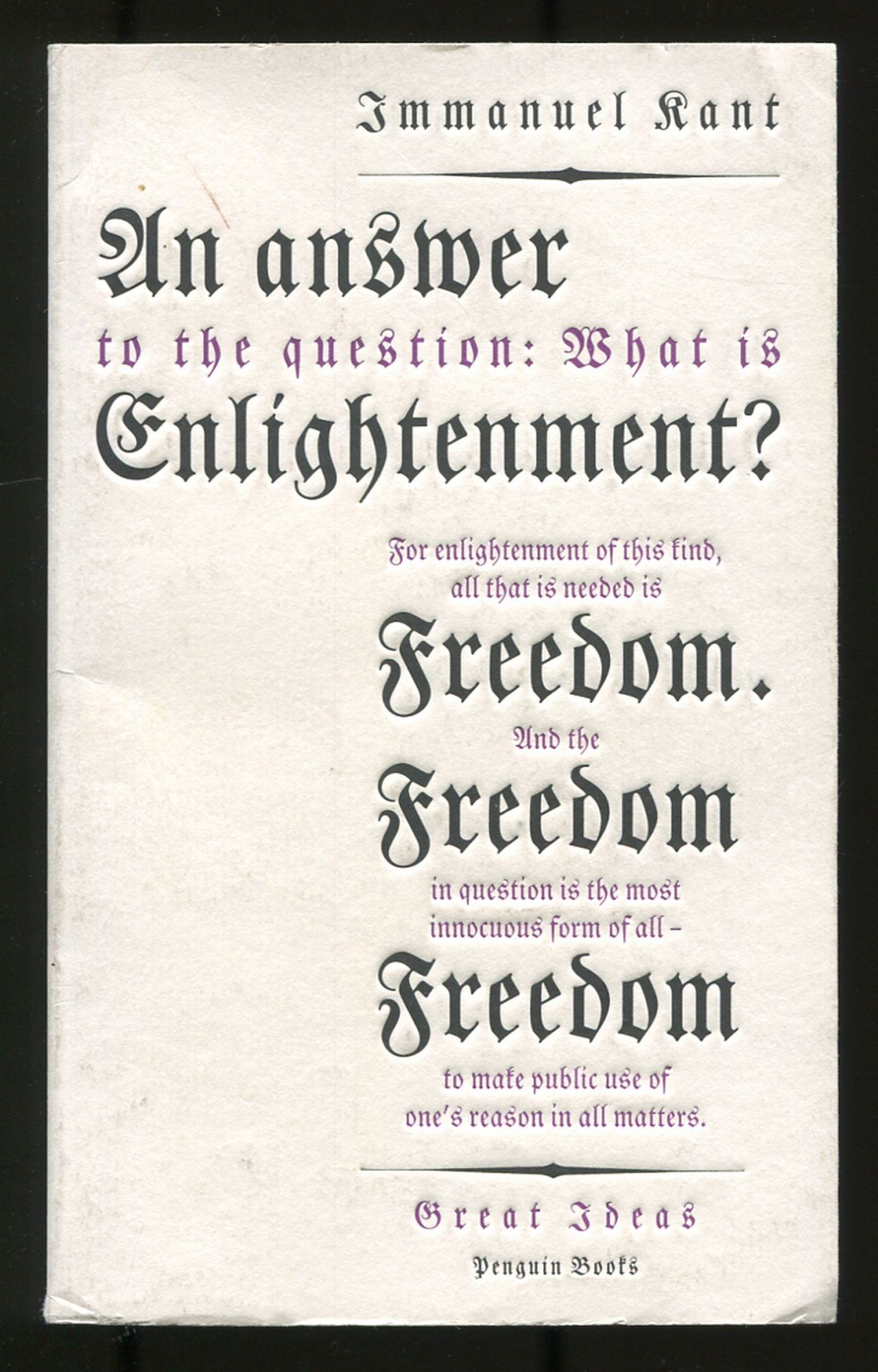
Yet nothing but freedom is required for this enlightenment. And indeed it is the most harmless sort of freedom that may be properly called freedom, namely: to make public use of one’s reason in all matters.
Immanuel Kant, “An Answer to the Question: What is Enlightenment?” (1784)
Herein, Kant introduces a term that has evolved into genuine significance, i.e. the notion of public reason, or the public use of reason. There are others who have overlapping ideas with Kant on this matter but the latter’s expression is perhaps what affected most subsequent development of the concept. He provides striking clarity to what he means (his italics) though in our time it has to be clarified further since societal participation in public discussion has expanded considerably:
Everywhere here there are limitations to freedom. But what kind of limitation is a hindrance to enlightenment? And what kind of limitation is not, but rather even serves to promote it? I answer: the public use of one’s reason must be free at all times, and this alone can bring about enlightenment among humans; the private use of one’s reason may often, however, be highly restricted without thereby especially impeding the progress of enlightenment. By the public use of one’s reason I mean the kind of use that one makes thereof as a scholar before the reading world. I understand the private use of one’s reason to be the use that one may make of it in a civil post or office with which one is entrusted. For many affairs that serve the interests of the commonwealth a certain mechanism is required, by means of which some members of the commonwealth must play only a passive role, so that they can be led by the government in the pursuit of public ends by means of an artificial unanimity, or at least be kept from undermining these ends.
What Kant is saying is that the public use of reason should be encouraged by the state when it is for the best interests of all and that it is different from demands required by private reason in the context of a person’s official duties in positions of authority. Hence, a government official will employ modes of thought suited for their particular sphere of operation which can be quite restricted due to codes of compliance required to allow for the efficient functioning of their departments; this has continued till today when those in such posts can speak their mind in public but must make clear it is their personal opinion. That view, as with the general public, is to be allowed in the public arena and conducted through proper exercise of reason—that would be the public use of reason. This can be difficult for some due to the delicacy involved depending on their station in public office or posts they hold, but that space of public expression should exist as it does for the general public. Such discussions must occur within the ambit of the law. This is crucial as not only would this be in the public good but allows for the creation of knowledge and enlightenment.
Kant was influenced by Milton but his ideas here are a signal achievement advancing further the ground covered by the latter onto new levels of sophistication. Importantly, Kant continues to explain that there is a form of social contract within a state which allows for such discourse that implies not restricting or censoring (as Milton would agree) ideas in the public arena no matter how uncomfortable they may be if they are in the best interests of that society; there must be no restriction of such ideas by those who do not want to hear them (or disagree with them). This is critical as the consequences of such restrictive actions in public discourse would be harmful. Kant raises inevitably the sensitive issue of religion, and it is Christianity that held sway in Germany. Showcasing the courage he asks of his readers, he adds,
But should not a society of clergymen, for instance a church assembly…be entitled to commit by means of oath among themselves to a certain unchangeable symbol, in order to thereby ensure themselves of constant guardianship over each of their members and thereby over the entire population, and even immortalise their guardianship? I say: that is completely impossible.
This deserves careful reflection. The clergy cannot insist on influencing the populace as to how they ought to conduct their lives despite the vast majority admitting to some form of belief in Christianity. Like Milton, Kant supported the separation of church and state. Though Milton wanted a complete separation between the two—and like Kant he was a genuinely religious man—Kant did see a profound connection between the morality of Christianity (not the institution of religion) as a force that shaped society, public discourse, and the nature of the state for good (not that Milton was against such ideas). Kant’s idea of public reason directly influenced modern political philosopher John Rawls’ notion of public reason: though his version is congruent to his presentation of political liberalism. For Kant a form of social contract (between the people and the state) was a function of this bifurcation between church and state: no imposition of restriction on public discussion could be allowed if enlightenment of the people was to occur; certainly none that can be imposed by the church or government. He says,
Such a contract, which is concluded in order to prevent for eternity all further enlightenment for the human race is quite simply null and void, even if it were to be confirmed by the most supreme authority, by means of parliaments or by the most ceremonious of peace treaties. One generation cannot form an alliance and conspire to put a subsequent generation in such a position in which it would be impossible for the latter to expand its knowledge (particularly where such knowledge is so vital), to rid this knowledge of errors, and, more generally, to proceed along the path of enlightenment. That would be a violation of human nature, the original vocation of which consists precisely in this progress; and the descendents are thus perfectly entitled to reject those resolutions as having been made in an unjust and criminal way.
No one has said this with greater clarity to this day. Any law, decree, ordinance, whether local or international and certainly that which involves the church or clergy restricting responsible public discourse debilitates enlightenment of the individual, and a society or nation, as Milton would also agree. Its repercussions are severe and have negative impact for generations, and is tantamount to criminality. It also violates any sense of decency, justness or fairness. Kant’s use of the term ‘scholar’ suggests the role of public intellectuals which today in egalitarian times would include anyone expressing a knowledgeable, responsible opinion. This does not include the uninformed and brainwashed (who are entitled to their opinion) but would not even understand what Kant is saying even as explained by thinkers centuries later or by public discussions—never mind those who will not want or refuse to understand, deliberately try to disrupt public order via incitement to violence; or cling to the pretense of obtuseness as a way of justifying recalcitrant views. An essential point for Kant is that after whatever disagreements the public may have or individuals espouse they will obey the laws for that state which would, in his system, be in the highest interest of each citizen within the framework of his definitions. Milton would probably agree. This is the creation of civil discourse, which has tragically degenerated beyond recognition in the West today.
Kant expatiates further:
The touchstone of anything that can serve as a law over a people lies in the question: whether a people could impose such a law on itself…But to agree to a permanent religious constitution that is to be publicly called into question by no one, even within the space of a person’s lifetime, and to thereby destroy, as it were, and render vain a span of time in humankind’s progress toward improvement and thus make it detrimental to one’s descendents, is quite simply impermissible. A human being can postpone enlightenment for his own person, and even then only for a short time, with regard to that which is his responsibility to know. But to renounce it for his own person, and more still for his descendents, amounts to violating the sacred rights of humanity and to trample them under foot. But what a people is not able to legislate over itself, a monarch is even less entitled to decree; for his legislative standing is based precisely in the fact that he unifies in his will the collective will of the people.
Hence, a system of government cannot impose upon the citizenry what the latter would never legislate or insist upon itself. Today, Europe’s constant imposition of all that is wrong for its national interest or citizenry is an example of violations of this principle: such as jurisdictions by external so-called human rights bodies like the ECHR that oppose Reason and common sense. Bringing in millions of ‘asylum seekers’ who then literally rape, pillage and turn what is left of the West into a moral wasteland and help devolve it into the third world recreating the broken societies they left—this cannot be part of any sane social contract. The will of the people of the host state is not reasonably represented, nor is trying to violate the agreement from a national referendum bypassing the legislature or national consensus, thereby disrespecting said contract (e.g. Starmer’s attempts to get closer to the EU, undermining Brexit). But what Kant proposes is the bedrock of modern democratic principles and practices, what gives legitimacy and rationality to any form of representative democracy. And as Kant further explains:
If he [the monarch] only looks to ensuring that all genuine or supposed improvement is consistent with the civic order, then he can for the rest just let his subjects do that which they themselves find necessary to undertake for their own salvation; it does not concern him, but it is his concern to prevent one from hindering another, by forceful means, from working to determine and promote his own salvation with all of his own powers.
Religious, personal or social development, a person working towards their salvation (spiritual, or personal well-being) is in the hands of the individual not the state nor any other body or person. A person can turn to a religious body or to others for guidance on such matters but that is a personal choice: not one imposed by any religion or anyone else. This is concomitant with the moral autonomy that is the foundation stone of Kant’s moral philosophy, his critical and practical reasoning, moral judgement; indeed, it permeates all else that flows subsequently from his pen. Ultimately for Kant, this is religious freedom, that which operates within a civic arena of acceptance of the national traits and customs, adjustment to the principal religious practices and tenets of the country, respecting the boundaries and following the laws established within that framework: not undermining it or trying to replace it; and if there is significant disagreement and unwillingness to accept that there is the option of going elsewhere. However, the societies Milton and Kant are concerned with are those of the Enlightenment, i.e. the West—all of which are underwritten by Judeo-Christian values.
Notwithstanding, arguably the tangible legacy of thinkers such as Milton and Kant is the attempt to create a secular space for argumentation and political discourse, the formulation of public policy: a necessary condition for public reason. And, indeed, the secular is a concept from Christianity as the secular state is undergirded by Judeo-Christian values. Secularity is broadly a distinction between the temporal world and spiritual realm, but it is given a sharper definition via the renowned response from Christ to the Pharisees in reference to a coin used to pay taxes to Rome (Matthew 22:15-22). This is the separation of what belongs to the state and what belongs to God. This is the forerunner of the secular space that has come down to us through the ages by the influence of the West on statecraft. But it is this difference that is topsy-turvy today with the anti-Enlightenment infiltration of religious ideologies that repudiate this. The purpose of the secular as envisioned by Milton and Kant is to enshrine Reason and its expression as public reason that in turn allows for the proper exercise of freedom of conscience, freedom of speech, freedom of the individual: moral agency. Kant appropriately ends his essay saying it is imperative for the state to nurture this freedom such that (his italics) “even to the principles of government, which find it to be beneficial to itself to treat the human being, who is indeed more than a machine, in accordance with his dignity”. The cultivation of Reason is a driving force in the positive evolution of humanity; people as autonomous beings: not automatons.
Thou canst not touch the freedom of my mind.―John Milton, Comus
John Milton, Paradise Regained
He who reigns within himself and rules passions, desires, and fears is more than a king.
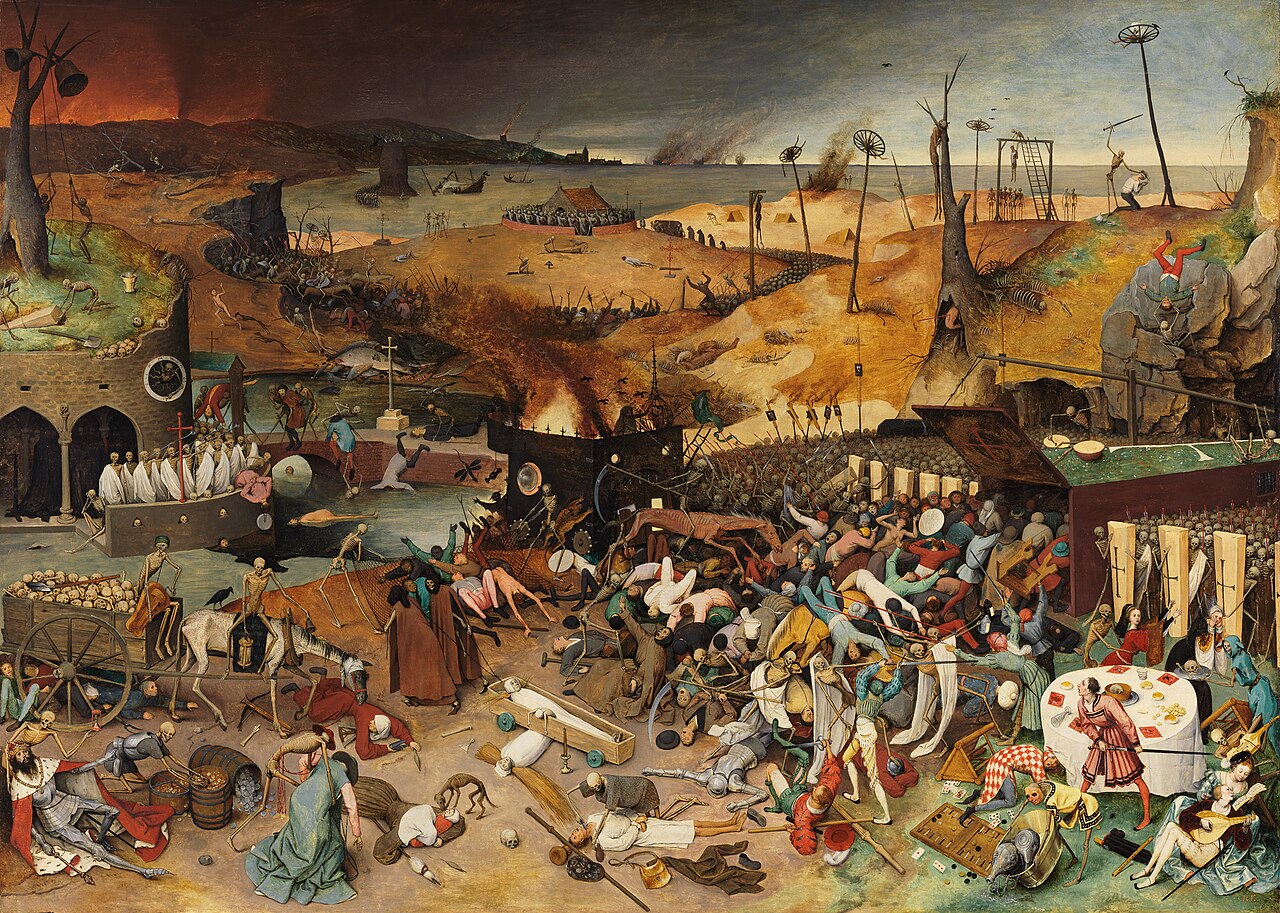
The assault on Reason
There is a direct challenge to the Judeo-Christian based secularity of the West. And it has arrived legally and illegally into the West, it carries with it the DNA of another system that is incompatible with western values: it is embodied in Sharia law, or the legal system of Islam and it defines the essence of what Muslims are meant to obey strictly. An experimental instance of checking with Grok (AI chatbot) the query ‘Is Sharia incompatible with the West’ yielded some responses:
Yes, classical Sharia (as traditionally derived from the Quran, Hadith, and fiqh jurisprudence) is fundamentally incompatible with core Western principles. These include secular governance, individual liberty, equality under the law, freedom of speech and religion, and democratic sovereignty. This incompatibility arises from Sharia’s structure as a comprehensive divine legal-moral system that does not separate religion from state, subordinates human legislation to fixed religious texts, and prescribes outcomes that clash with liberal democratic norms…
In short, a privatized, reformed Islam compatible with individual rights can fit the West. Classical Sharia—as a totalizing politico-legal order—cannot [exist/fit] without undermining the secular, egalitarian, pluralistic foundations that define Western success. Societies ignoring this distinction risk eroding their own coherence through incompatible parallel norms. Integration demands clear supremacy of Western law, not accommodation of systems that reject its premises.
The question was rephrased to ‘Is Sharia compatible with the West?’ It concludes:
Reform is possible in principle (as with historical Christianity post-Enlightenment), but lacks centralized mechanism and faces scriptural literalism barriers. Privatized, non-coercive Islam can coexist; supremacist or totalizing Sharia cannot without eroding secular pluralism, equality, and freedoms that underpin Western stability.
The distinction matters: welcoming individuals who accept Western primacy differs from accommodating systems that reject its axioms. Societies affirming constitutional supremacy while addressing parallel norms preserve coherence; denial risks gradual fragmentation.”
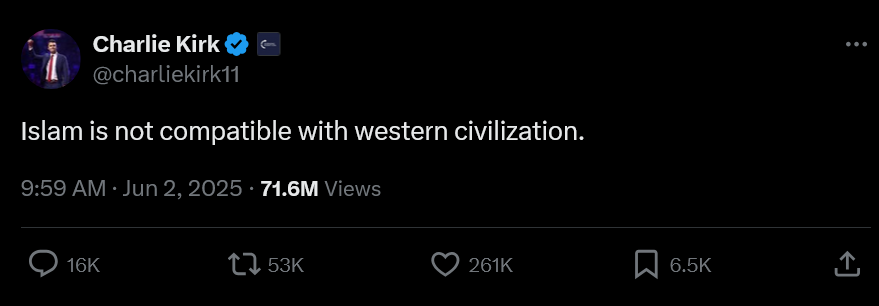
Indeed. Interestingly, the Grok quotes state: “….a privatized, reformed Islam compatible with individual rights can fit the West”, and “privatized, non-coercive Islam can coexist…” with the West. This hearkens to Kant’s distinction between private and public reasons. To apply Kant here in the context of public reason: Islam as a belief in a secular western state will like other faiths be kept within bounds, and its ideas in the public sphere may be expressed only in the best interests of all— including non-believers or those classified as infidels, i.e. in a society underwritten by Judeo-Christian principles. But “privatised Islam” means a faith that is kept private or personal, limited in influence to the individual or community; it cannot impinge on society at large such that it seeks to reshape the ground rules, ethos, heritage, practices, governmental and social norms of the state it is allowed to operate in. It is restricted in public discourse unless it is a diluted version that has been securalised, and does not undermine values and institutions of that western society: but this is in the framework of principally free market societies. It may or may not imply Kant’s notion of public and private reason but it overlaps with it. Even so the transgression of the western secular state by Islamists today is relevant to much of the West’s social and political difficulties. The problem for the the so-called ‘liberal’ West is the plague of Unenlightenment, Wokeism and ‘Diversity’, ideologies many seem obsessed with.
This still begs the issue of separation between church and state as a necessary condition as to whether proper secularism can function in our era due to ‘diverse’ religious influences in many modern societies. And here the force of Kant’s ideas comes into play; his idea of private reason is remarkably pertinent to the situation in question. For the West’s debacle concerns principally the issue of Islam which it has allowed to spread rapidly within its borders: and Islam decries separation between mosque and state as anathema. As he did with the Christian clergy’s role Kant’s reasoning addresses the matter perfectly in countering the Islamic demand for merging private and public reason in which the private reasoning meant for preaching in the mosque, or only for Muslims, is what all of society has to conform to: this is disallowed for it prevents any enlightenment from taking place for the individual or society, and especially for future generations; it also violates free will and moral autonomy. Kant states categorically that to try to impose religious guardianship and edicts for all time implies future generations are “perfectly entitled to reject those resolutions as having been made in an unjust and criminal way.” Herein lies a fundamental rupture between the Enlightenment principles of the West and Islam as it is meant to be practised.
Milton’s ideas are mostly subsumed by Kant. The upshot of all this is that the church cannot censor not set the agenda for society and be the guardians of everyone. It cannot control the state. The state cannot control the church nor censor people unless there is contravention of the law. It should not suppress freedom of thought nor speech but set boundaries for its expression. The public space is secular and citizens have to act responsibly within this framework for the best interests of all. Moral agency of the individual is paramount. The entire system is grounded on Judeo-Christian principles.
Islamism is against this; its raison d’être is the supplanting all that Judeo-Christian values signify, which would include everything Milton and Kant stand for, the countering of Enlightenment ideas. Kant (and Milton) insist correctly that there must never be a “permanent religious constitution” imposed on a society as it would violate “the sacred rights of humanity” and limit the creation of knowledge and, certainly, inhibit enlightenment. What Sharia-Islam demands is the conversion of all to its ideology and doctrines, the Disenlightenment—opposition to this is to be subjugated or destroyed.
(The claim that Turkey is a secular Muslim state is moot. It is no longer the stolidly secular state of Atatürk; this is due to increased Islamisation of the state by current president Erdoğan. The country is secular in name but increasingly influenced by conservative Islamist elements.)
Returning to the accurate responses from Grok. The operative terms are ‘compatible’, ‘non-coercive’, ‘reformed’, and ‘coexist’—none of which is possible as it stands given what is happening in the West: given the problems in America, most of Europe and Australia due to increased mass illegal immigration and rising Islamic influence. The violence, intolerance, aggressiveness and push for dominance from the dissolution of boundaries between the private and public by Islamist clerics, like the erosion of state boundaries keeping illegals out, has generated consistently disastrous outcomes. This is exacerbated by online radicalisation that has led to increased ‘lone wolf’ terrorist activity (like Trump’s latest attacker). According to the Global Terrorism Index : “The four deadliest terrorist groups intensified their violence in 2024, driving an 11% rise in fatalities. In the West, ‘lone wolf’ attacks now dominate, accounting for 93% of fatal attacks over the past five years.” The four deadliest terror groups are Islamist, and the report further states:
- Terrorist attacks jumped by 63% in the West, Europe was most affected where attacks doubled to 67
- In 2024, several Western countries reported one in five terror suspects as under 18, with teenagers accounting for most Islamic State-linked arrests in Europe
- Seven Western countries are in the first 50 most impacted countries on the Global Terrorism Index
In addition, the US has seen a 200% rise in antisemitic incidents in 2024. These are not matters to be glossed over as aberrations, they are the deliberate acts of those who are following to the letter teachings of violence cloaked as religion.
Many Jews are frightened, many Jews are scared. We are a resilient community. My great-grandmother survived Auschwitz. She came to this country [Britain] hoping to rebuild her life and live freely as a Jewish person. It’s deeply sad that many of her grandchildren and great-grandchildren are now questioning whether they can continue to live here.
Dov Forman, a 22-year-old student at King’s College London. A Somalian man, Essa Suleiman, given British citizenship: stabbed and injured two Jewish men in their 70s and 30s. Israel has called upon Britain to do more in safeguarding Jews.
But not everyone in the West is rolling over and playing dead due to suicidal empathy and distorted humanism heightened by the deterioration of Reason. Given the problem of illegals and Islamism in the US the congressional Sharia-Free America Caucus was established last year and has currently 65 members and growing. As one of its members Senator Tommy Tuberville says:
I’ve been reading a lot about it the last three or four months and keeping up with what’s going on in Europe and other places. Obviously, all the terrorism going on across the world; once I started reading what’s happening in Europe, I started noticing things happening in United States, and what happened 10 years ago in Europe is happening now to us.
So, it’s spreading and I’m afraid if a lot of the countries in Europe are going to ever get their countries back the way they want, their culture, they’re going to have to fight in the streets. It’s going to be that bad. And so, we don’t want that to happen here. Hopefully we’re learning from the experience of, unfortunately…Europe.
And so I started talking to people from Europe, doing my background work and then started seeing things around our country—where more mosques were being built. We have 700-800 mosques in this country [there are about 3,000 mosques in the US as of the mid-2020s]. We have five million Muslims. But I want to say this, I’ve got Muslim friends, but they don’t teach or preach Sharia law. They don’t go by the Quran. They’re not Christian, but they’re a different religion. And as long as you’re here and go by our culture and our ways, try to make our country better, I’m all for you. But don’t bring something here that’s going to completely try to change our country.
I noticed this happening years ago in Europe…9,000 attacks against churches from 2022 to 2024. Nine thousand criminal attacks…and we’re having them in our country now. It’s a slow buildup and that’s where it starts. They’re trying to get into small political jobs, the school boards, the county governments, the city governments. We have a few that are in Congress.
Infiltration’s part of Sharia…Our mainstream media, they obviously take the side of everything other than our country because a lot of our young people have been indoctrinated, maybe not by Sharia or the Quran, but they’ve been taught by a lot of our universities to hate our country the way it is. And sometimes they jump on that bandwagon: Palestinians and Antisemitism and all those things. They’ve been jumping on the wrong bandwagon, [against what] has brought our country 250 years of success.
When Tubervile states he has Muslim friends that come across as nominal or cultural Muslims, he is highlighting what could be a form of public reason: for they could have a strong faith in their version of Islam but in the public sphere it is adjusted to the mainstream mode of thinking and interaction with others (or a ‘privatised Islam’ mentioned earlier); it is an acculturation to a secularity shaped by Judeo-Christian values; they show that they fit in and are not there to upturn the society that gives them a place to live. This would not apply to genuine Muslims who would be followers of Islamism, and who adhere strictly to their teachings and Sharia. As Tubervile says the media, many youth, and a failing education system are producing Wokeist types who denounce and do everything to subvert all the good their society offers, and the opportunities it provides: by doing all they can to bring it down, not to improve it but to take up causes which are ultimately aligned to whoever wants to destroy their society, culture, and state. Not only have attacks against churches and Jewish centres increased recently in the US, Britain has about 10 attacks on churches each day, and almost 4,000 offences against churches and other places of worship last year alone. Not a sign of societal progress. And in France, a church built in the 1880s has been burnt down: this is but a part of similar disasters, as many churches there have also been attacked resulting in “desecration of altars, smashing of statues, graffiti with anti-Christian or Islamic slogans, theft of liturgical objects”.
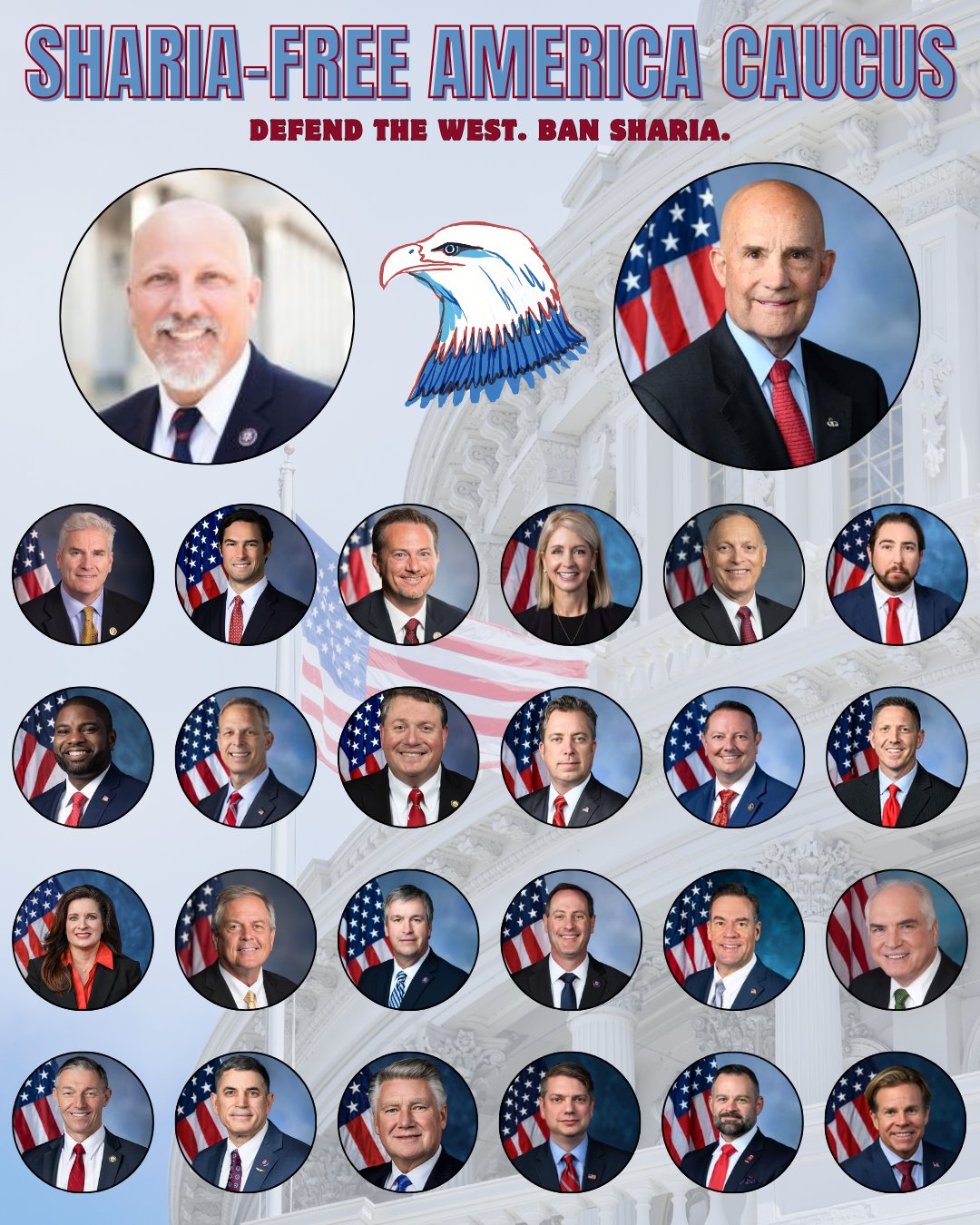
Adding depth to Tuberville’s comments are noteworthy remarks by co-founder of the Sharia-Free America Caucus, Congressman Chip Roy of Texas:
Texas will not survive, America will not survive and the West will not survive if we do not stop the march of Islam in Texas. Period. Full stop. End of story…
There’s upwards of 600 organizations scattered throughout the state of Texas currently advancing the cause of the Islamification—of not just Texas—but America and the West. People don’t get that, and they don’t get how important it is for us to focus on it and…open up all the books of these organizations. Look at where the money comes from. Look at how they’re connected to all of the other affiliate organizations, and try to cut the head of the snake off. Stop the flow of the money. Stop the organizations from advancing. I’m working on legislation right now with a number of different partners to address our ability to be able to denaturalize people. And this is something that can be an uncomfortable conversation that we need to have…
I was starting with a basic premise: Sharia law is inconsistent with our laws, inconsistent with the Constitution, the Declaration of Independence, and Western civilization. And the ranking Democrat said, ‘Well, if you get rid of Sharia law, you’re going to have to remove all Muslims.’ I’m paraphrasing, but it was effectively that, basically giving up the game; virtually all Muslims adhere to Sharia law if they’re truly Muslim. So, can we just speak truth? Because that’s what we have to actually address. But nobody wants to address it because they’re too afraid, because they’ve been taught: you can’t say that. You might offend somebody. Well, holy hell, I might offend somebody who wants to actually destroy my way of life? I’m not afraid to offend somebody who wants to kill the way that we live as Americans in the West.
Congressman Roy is admitting that allowing Sharia to thrive in Texas and the rest of the US implies the strangulation of his country and the way of life of its true citizens; politicians who remain passive to this betray those who expect their elected representatives and government to protect them, actually fighting for their best interests, ensuring the success and survival of their nation. As Congressman Keith Self, the other co-founder of the caucus says (his capital letters): “We are devoted to the freedoms and liberties of every American and will work to ensure that Sharia has no place in our courts or our communities. DEFEND THE WEST.” The caucus is exemplary public reason in action. It is, in fact, an impressive combination of private and public reason as Kant defines it. Members doing what they are elected to do and speaking up according to what is required of them, and making the case as needed in public: moving beyond sensitivities of those who want the truth to be suppressed, as it places the spotlight on activities some prefer remain unnoticed—but it is in America’s national interest it be brought to light.
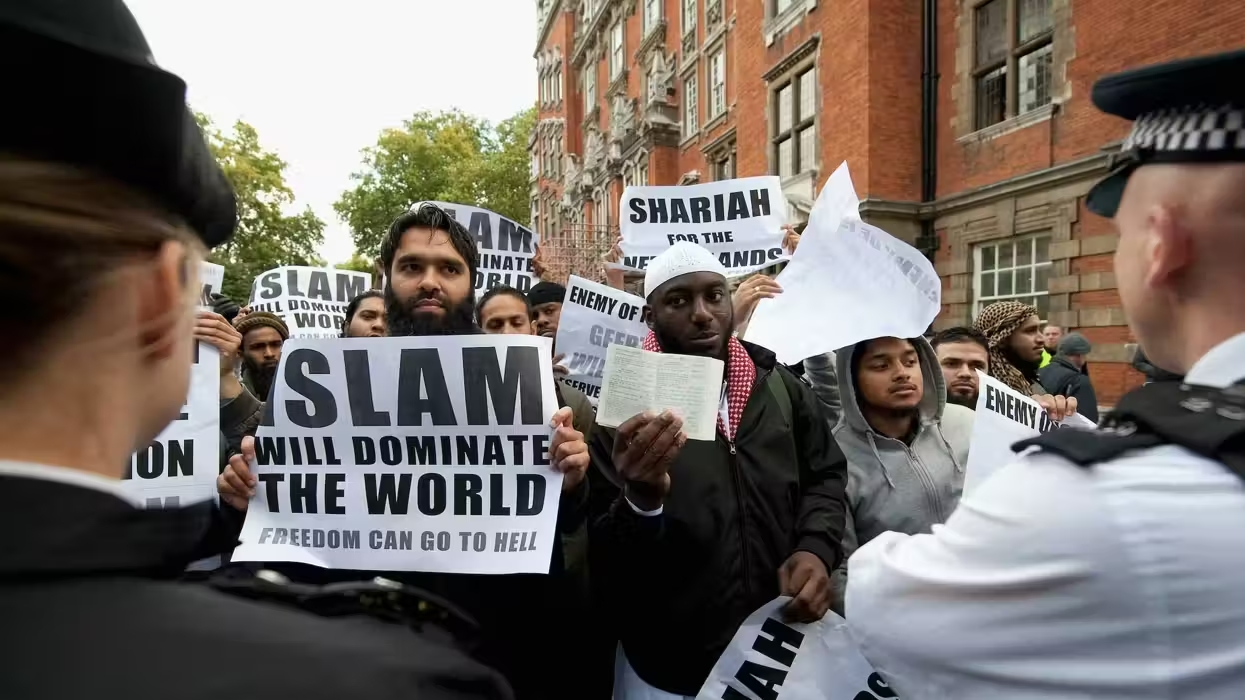
To show how diametrically opposed Sharia is to the western system commentator and Islamic scholar Robert Spencer in his congressional testimony claims that, for instance, domestic violence against women is allowed under Sharia but is disallowed under US law. He adds,
As Sharia is considered divine law, those Muslims who adhere to it always consider that it takes precedence over the laws of the land. Moreover, immigration to a new land to bring Sharia to it is also an Islamic imperative. The Quran in chapter 4:100 promises a reward from Allah to those who immigrate for the sake of Allah, which means for the purpose of bringing Sharia to a non-Muslim land.[2]
The contradiction between Sharia and US law is a tangible one.
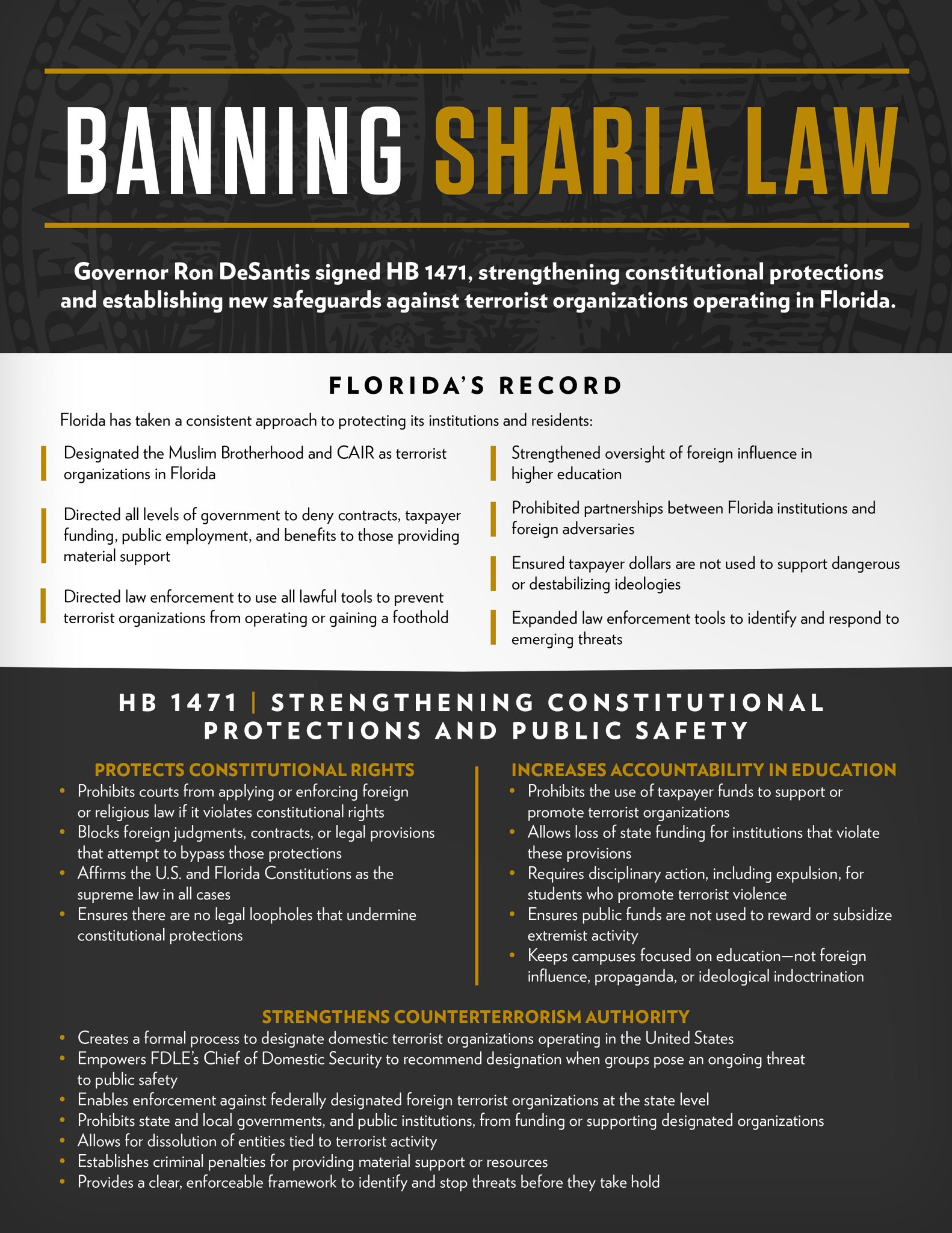
In Florida, Governor Ron DeSantis is taking his duties and responsibilities seriously. He states what the clear and present danger is to his state and country; he is another instance of successfully merging private and public reason:
We have a responsibility to defend and reinvigorate Western Civilization and that means protecting against creeping Sharia in all its forms. To uphold the rule of law, our state must operate under one legal system, the Constitution must remain the law of the land, and we must defend our institutions from those who would harm us—especially terrorist organizations that seek to infiltrate and subvert our education.
He adds in a recent announcement on a bill signed into law:
What I see happening in Europe: I see a migration not to assimilate but to displace the current cultures that are there. And so we obviously are not going to allow that to happen here in the state of Florida. But the bill also does a lot of other things involving institutions or groups that are linked to any terrorist organization. You can have these groups that may not be waging physical war type jihad. They may be waging a stealth jihad. They may be waging a financial jihad. To me, that’s still jihad and we’ve got to stop it. And this bill provides the structure to be able to do it.
At least in America the tocsin has been sounded, activists and politicians are rallying, providing leadership to save their nation.
Meanwhile, in Britain its milquetoast quisling Premier Keir Starmer and his regime are efficaciously doing all they can to ruin their country. The sustained suicidal path for his country and party beggars belief. Not only are illegal immigrants continuing to pour in, the UK’s anodyne military and erstwhile great navy are hardly a threat to any hostile force. The latest fiasco being a Russian tanker and frigate going across the English Channel as a humiliating gesture with “Safety comes first” written across the tanker carrying oil illegally, challenging Starmer’s boast of seizing such vessels: and nothing could be done about it.[3]
There is a wider context to Britain’s hastening decline. As commentator and bestselling author Matthew Goodwin writes in Suicide of a Nation (bold letters in the original):
But Britain is not being conquered or invaded. Worse: it is being abandoned by the very people who were meant to protect it—a ruling class and their cheerleaders such as Sir Keir Starmer, London mayor Sadiq Khan, Tony Blair and, before them, hapless Tories such as Boris Johnson, who have betrayed their own voters.
As the historian and philosopher Arnold J. Toynbee once said: ‘Civilisations die from suicide, not by murder.’
Across Britain—in cities, towns, villages and suburbs—many people are now experiencing the same private, unspoken sense of shock.
You walk down a street you once knew but no longer recognise. You visit the place where you were born yet feel like a stranger. You hear languages that are not your own. You see customs and cultures you do not share.
The country of your childhood seems to exist only in old films, documentaries, fading books and nostalgia reels on social media.
The fact is that a nation is bound by a shared identity, history, culture and way of life. It is a community filled with your relatives, ancestors and neighbours, who you know and trust, and whose graves, stories and memories lie around you…
Yet whenever anyone articulates this creeping sense of dispossession, they are shamed, silenced or mocked by the elites who are imposing these changes on them.
What we are witnessing is not just a small adjustment, a temporary shift, or the gentle evolution of a nation. It is something far more dramatic and potentially permanent.
It is the deliberate and sustained transformation of the country.
Indeed, nations do not remain the same if the people who shaped them, built them and embody them collapse into minority status…
Muslims will go from representing about one in every 17 people in Britain to one in every four—and one in every three among the young.
This will all happen within the lifetime of a child born today—in the next 74 years. When that person is in their 30s, the White British will no longer be a majority.
By then, the hushed debates that are already starting—about segregated Muslim areas, blasphemy laws, the rise of Islamic sectarianism in politics, Pakistani Muslim rape gangs, the spread of antisemitism and the capacity of Islam to integrate into the Western nations—will all seem quaint by comparison…
Once, names such as Thomas, Jack, Oliver and Noah dominated. By 2023, Muhammad—in the top ten since 2016—had replaced Noah as the most popular boy’s name in the country. Another new entry in 2024 was Yahya, the name of the Hamas leader who oversaw the worst mass murder of Jews since World War II.
The speed of change is staggering…
Official figures, meanwhile, show that nearly 350,000 foreign-born families will benefit from extra welfare handouts, with nearly 200,000 coming from only ten countries, including Pakistan, Bangladesh, Nigeria, Somalia, India, Ghana, Afghanistan and Iraq.
More than five million people in this country now prefer to speak a language other than English. In 2025, the NHS reported that one in ten patients do not have ‘functional English language skills’, with most speaking Urdu or Bengali. Translation leaflets had to be sent out in 50 languages with the 2021 census.
You do not need to be a demographer to see where this leads.
Do you want the political, social and religious cultures of Pakistan, Nigeria, Bangladesh, Afghanistan, Albania and Iraq to be imported into Britain at scale?
These are societies that are marked by deep ethnic and religious divisions, low trust in institutions and completely different ideas about justice, family, sexuality and women’s rights.
Albanians, who make up roughly one in ten foreign prisoners, have the highest arrest rate of any nationality in Britain—210 for every 1,000 of their people.
They are followed by Afghans (a rate of 107), Iraqis (93), Algerians (73), Moroccans (70) and Somalis (65). The rate among British people is 12 for every 1,000. North Africans are convicted of sexual assault at around seven times the rate of British people…
The eruption of antisemitic protests. The rise of ‘homegrown’ Islamist terrorists. State institutions such as West Midlands Police appearing to prioritise Islamist thugs when telling travelling football fans from Israel they are not welcome in Birmingham.
Nobody ever voted for Britain to be transformed in this way. Nobody was ever asked if they wanted it. So how did Britain arrive at this point?…
But these are symptoms, not the disease.
The real cause of our national unravelling is a new ruling class that no longer believes in the nation, no longer values its historic majority and no longer really cares about the continuity of the country and its people.
It is using its power to remake Britain around its deranged worldview of suicidal empathy. This ruling elite’s loyalties lie not with Britain but with a global class of other elites. As Sir Keir Starmer admitted in 2023, he prefers Davos to Westminster.
Time and time again, the hard-working, law-abiding majority is expected to pay the financial, cultural and social costs of these decisions.
Such as the warped mindset behind our spiralling welfare bill which is projected to exceed £400billion a year by 2030.
Nearly 8.5 million people rely on Universal Credit welfare, and taxpayers are contributing £10 billion every year to provide welfare to more than 1.2million foreign nationals…
Above all, the underlying ideology of the ruling class and institutions that imposed this demographic revolution has to be overhauled. Otherwise, we will fail in our promise to our ancestors to pass on the country that we know and love.
The hour is late but not too late. Britain is not yet dead but it is in mortal danger.
If it is to be saved from national suicide, it must be now.
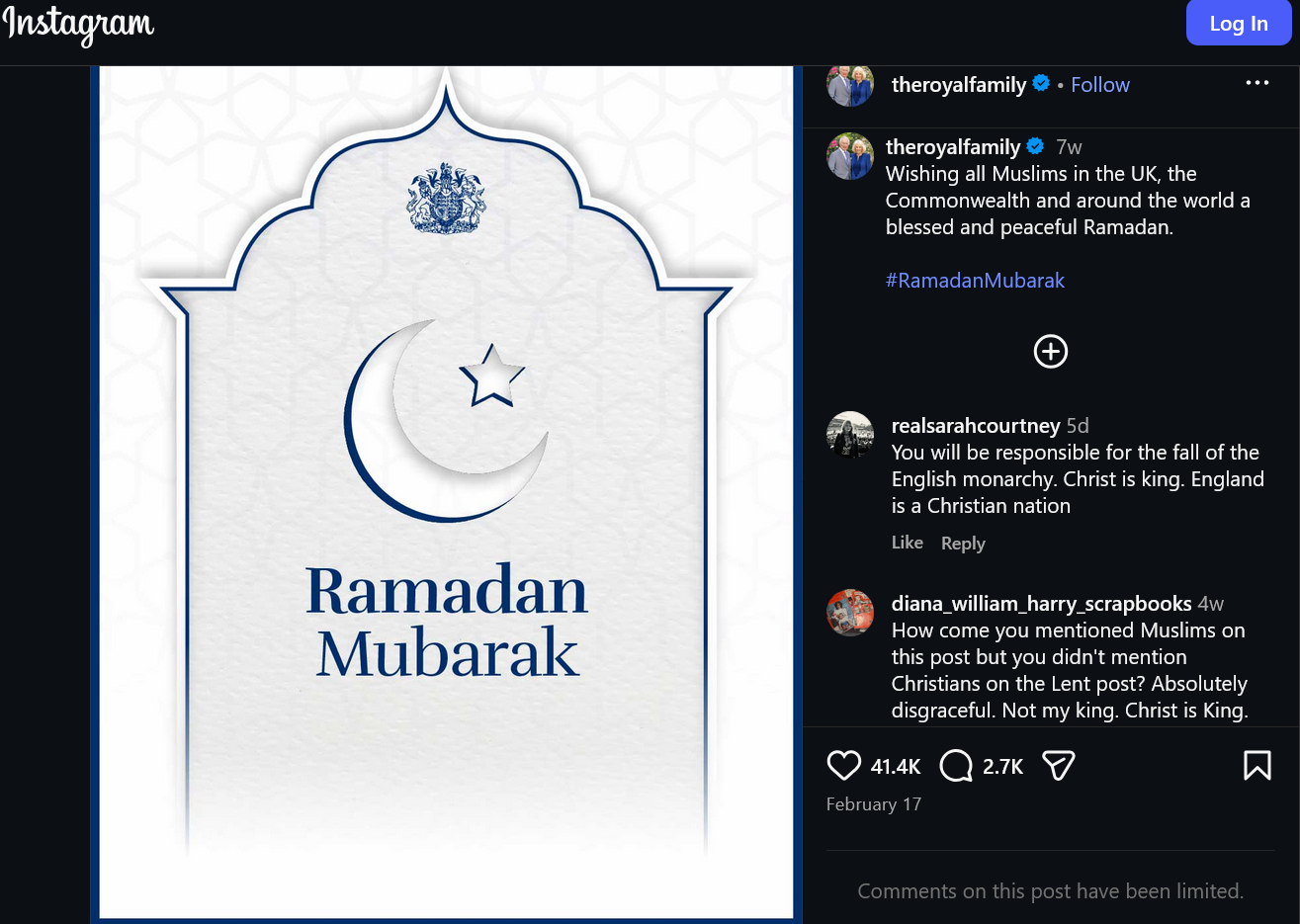
To worsen matters, King Charles who is also the Head of the Church of England skipped making the expected Easter address: when he did give messages in the previous two years. He has received criticism for this as instead of wishing his Christian subjects for Easter he gave messages wishing Muslims for Ramadan and Eid. This led to rumours that he has converted to Islam. In his notorious Instagram post Charles received choice remarks from some of his subjects that include: “You realise you are only King supposedly because you are appointed by God? You realise that right? Think you need reminding”; and the even more strongly worded: “What a disgrace. Please for the love of the Church of England, stop pandering to this satanic cult.”
The good Bishop Ceirion H. Dewar has spoken up on Charles’ failure in his duty as monarch of Britain:
My Fellow Countrymen, Our government has failed to protect our Christian heritage. The Church, in many quarters, has failed to defend the truth entrusted to her. And His Majesty the King has not responded to the plea that was set before him…
For centuries, the Christian faith was not peripheral to British life. It was central. It shaped our laws, informed our liberties, restrained the abuse of power, dignified the individual, and gave this nation a moral architecture that endured through war, upheaval, and change. It made Britain, Great Britain. Not because we were perfect, but because we were anchored. Anchored in something higher than ourselves. Anchored in truth. And now, that anchor is being cast aside…
A nation does not become stronger by forgetting what made it strong. A civilisation does not advance by severing itself from the truths that formed it. A people do not become freer by abandoning the moral vision that gave their freedom meaning. And yet, this is precisely what is being asked of us. Quietly. Gradually. Persistently. To forget. To yield. To adapt. To conform. Until at last, we no longer recognise the nation we have become….
Decline is not inevitable. Collapse is not preordained. But renewal will not come from those who bend. It will come from those who stand. From those who refuse to bow to the spirit of the age. From those who will not call falsehood truth, nor truth falsehood. From those who understand that inheritance is not preserved by sentiment, but by conviction….
For a civilisation is not defended by titles, but by truth lived and upheld in the lives of ordinary men and women. So this is the call. Not to anger, but to action. Not to panic, but to purpose. Not to nostalgia, but to renewal…
History is watching. More importantly, God is not indifferent. And this generation will answer for what it did when the foundations were shaken.
This is a classic example of public reason (he points out the church’s failing) where Bishop Dewar as a citizen and man of faith, calls upon his King to uphold his public duty which he had sworn to do as Head of the Church of England. The bishop is making clear that he is speaking for the national interest in the public square, the secular space: he does not call for any conversion to his faith, nor attack any other; he treads a delicate line saying what he has to say to the majority of his people to preserve the very foundations that made Britain great—what the Tories and Labour (and certainly the Starmer regime) have refused to do over three decades: instead, they have done the exact opposite of what they were elected to do. Bishop Dewar’s letter and the interviews he has given testify to the dysfunctional severity of Britain such that some clergy (many remain silent) have to voice out the religious, spiritual, social and cultural threat the country faces from within: all imported by the government. There is not an iota of reasonableness in what the British and western governments have done in creating what was not necessary and of danger to their own societies in the first place.

Lest there be any doubt, here are the words of influential Islamist scholar Dr. Haitham al-Haddad. He is a Saudi born British Islamic jurist and chairs the Fatwa Committee for the Islamic Council of Europe, and a judge on the Islamic Sharia Council in the UK. The man is an advocate of strict Sharia and adjures hudud—such as amputation of hands, stoning for adultery, and execution for apostasy. The hudud reflects the essence of Sharia and involves “mandatory punishments in Islamic criminal law for offenses classified as transgressions against divine boundaries, primarily derived from explicit prescriptions in the Quran and Sunnah.” Here are some of al-Haddad’s exhortations in a talk piquantly entitled “Sharia: Barbaric or Perfect?”. He starts with:
Sharia simply is Islam. Sharia is Islam. Islam is Sharia. Both are the same thing… Once we talk about Sharia, we are talking about Islam. Once we are talking about Islam, we are talking about Sharia. They are the same thing….
All systems in the world apart from Sharia, they are man-made laws…any man-made law system is biased and unjust. Because any man-made law system is made by certain individuals who will make laws in their favour and they will neglect other people’s rights. Even in a democratic system, the right to vote, the right to legislate is given to people. That is not right.
In a democratic system, the right to legislate is given to the majority of people. And the minority of people as a group is neglected. So it is dictated by the view of the majority. In some democratic systems, the right to legislate is dictated by the minority, and the majority of people are neglected…
The word democracy is taken from Latin…which means the law of people or the rule of people. But that is not true because the people are not ruling themselves. A small minority for whatever reason are ruling over them…
We have this choice, we have Islam or Sharia which is the law of the creator. It is not a man-made law. It is the law of someone who is different from human beings. It is the law of someone who is not biased. It is the law of someone who knows everything because he is the creator. It is the law of the most qualified one to legislate because he is the one who manufactured everything, who created everything. It is the law of a gender free one. He is not biased for men. He is not biased for women. He is not biased for poor people. He is not biased for rich people. He is not a human being in the first place.
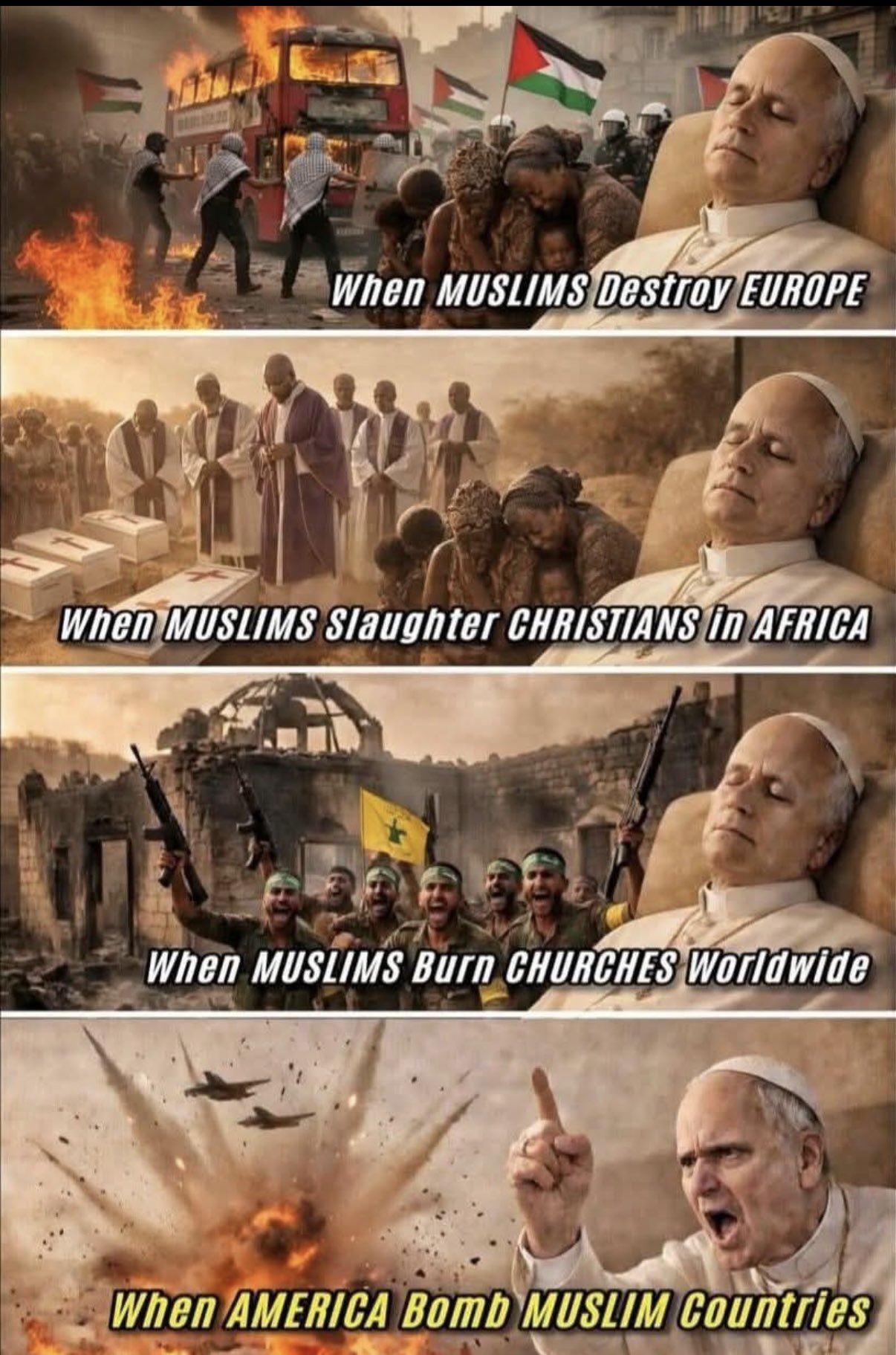
The obvious problem with this is that all interpretations by so-called Islamic scholars, jurists, and Imams are by humans who are imperfect. Yet their pontification on such matters is regarded correct rendering of divine intention. However, research is available to show that the early texts of Islam are primarily written on parchment, not papyrus as used for biblical ones: the difference being the constant rewriting, additions and redactions of Islamic texts over centuries can be discerned with the latest technology. It is the right of Islam to declare the texts as divine: but reason and science have shown countless revisions made by men; and all that is produced by men, as declared, is imperfect (some assessments state that there are 35 versions of the Quran). However, the inconsistencies in al-Haddad’s exposition can be assigned to students who are taking an introductory course in logic to suss out—they are legion. To Kant, this absolute reliance on religious authority is precisely what he argues against as it encapsulates immaturity, the straitjacketing of Reason, the cancellation of daring to think on our own.
However, author and historian Raymond Ibrahim affirms some of al-Haddad’s claims but adds proper perspective:
The thesis would be that Islam is not just another religion. It’s an entire coherent political system. A lot of people are approaching Sharia, which is usually loosely translated as Islamic law, and they have no problem condemning it. A lot of Americans, like [Texas Governor] Greg Abbott, Trump, say there’s no room for Sharia in Texas. And that’s all well and good but I think as people start learning, guess what: Sharia and Islam are inherently the same. Islam is the descriptive name of the religion, and Sharia is the prescriptive application. So that’s my ultimate thesis: maybe you see what Sharia is, maybe you don’t like it, maybe you find it incompatible with the West, but that’s not just some weird accretion that some radicals do: that is Islam…
So my point is it was a long constant massive war that went on that swallowed up most of the Christian West. We call it the West because it’s west of what? Well, when we think of the West now it has its own connotation, but historically in the medieval era, it was ‘West’ because it was the westernmost portion of Christianity—that didn’t get conquered [by Islam]. It was the final appendage, Europe, and there was constant warfare, constant struggle that went on…
America’s first war, most people are unaware, as a nation following independence from Britain was with Muslims who were again using the same logic. And it’s interesting because it comes out in the writings of Thomas Jefferson, this paragon of [the] Enlightenment, who had of course obviously forgotten about those Muslims, and didn’t really understand what was going on. But they were enslaving American sailors in their vessels [in 1783]. They were raided by the pirates, Muslim pirates from Barbary, and John Adams and Jefferson [both then diplomats in Europe] met with one of the ambassadors from Barbary [in 1786]. We have the existing letter where Jefferson wrote to Congress saying what happened in the meeting; he says, we told him [the ambassador] can’t we just be friends, we have nothing against you, you can do your religion, and let’s engage in trade, let’s help each other. And then Jefferson writes: ‘and the man answered us, and said—it’s in our Quran, you’re the enemy, you’re the infidel we must wage war on you.’
Does this sound familiar? This waging of jihad against America dates from 1783, in the Age of Enlightenment. The West, and America, are still facing a civilisational struggle against what is not compatible with them and the Judeo-Christian principles underpinning them. This jihad against America has been taking place well before the establishment of Israel in 1948: which is proof positive that the war against the West and Israel is civilisational, and an attack on Judeo-Christian principles; it has never been about any displaced Gazans or ‘Palestinians’, who have been hapless people at the mercy of a religio-political ideology of violence that dates back centuries.
One of the most tragic things about so much of this is the fear of being called ‘racist’ has become more powerful in this country [UK] than the fear that one might allow a brutal, savage murderer to kill innocent people…The consequences of this are not just somebody’s hurt feelings, or some money. It is the brutal murder in this case of innocent little girls who were just going to a Taylor Swift [-themed dance class].
Zia Yusuf, Home Affairs Spokesperson, Reform UK. The killer, UK born Rudakubana of Rwandan origin was in possession of “Jihad Against the Tyrants: The al-Qaeda Training Manual”. He also wounded several other children and two adults.
It is clear that Islam-Sharia does not allow for the free will and autonomy that Milton and Kant stand for, and the secular systems that developed after them. How can a call for absolute obedience to a text (and its interpretation by a minority over the views of the vast majority of the Islamic world and beyond) be compatible with independent thought, critical evaluation of the world, moral autonomy, being held genuinely accountable for our own decisions, or actual tolerance for that which is contrariwise. Free will implies moral choice, and moral action is possible only with the sovereignty of Reason: the ability to choose what is right despite pressures to conform and the safety of comfort zones; a difficult situation to be in but the autonomy or sovereignty of the individual who in the Judeo-Christian tradition—is ‘made in the image’ of the Creator—is a divine gift, and provides the absolute freedom to choose and bear the consequences of that choice. It is not the insistence of servility, subjugation, mindless obedience to a text, and gleeful violence as the means to enforce a perverted form of ‘goodness’.
Despite all the apparent technological advancement of the West and its military superiority (which is in decline, except for the US), how is it apparently at the mercy of Islamists and their Sharia enforcement agenda? Raymond Ibrahim accurately says that for years many have been allowed to come into the West; it is not an invasion but an invitation; that so-called elected representatives in the West are not acting in the name of their people, or enacting what they want or what they voted for but the opposite: everything that is not in the interest of the people. In this interview Ibrahim also notes pointedly:
To me, a radical Muslim is just a fundamentalist Muslim who’s following his religion…And the ‘moderate’ Muslim in this parlance, which is not accurate, is supposedly the Muslim who’s practicing true Islam. To me the ‘moderate’ Muslim, who exists, is actually the nonchalant Muslim who’s not taking his religion all that seriously. So, they exist. I do believe that these two distinctions exist…It shouldn’t be a ‘moderate’ and a radical. It should be a purist and an observant Muslim which is the radical, and the nonchalant secular cultural Muslim which is the ‘moderate’, and they exist…
Let’s say 10% are the observant radicals, I give you that number because that’s the smallest number I’ve heard from people who are serious. So my point is when you bring in millions of Muslims what’s 10% of that?
Let’s say England which has four million Muslims: so you have 400,000 radicals, right? So what does that mean?…It’s kind of like saying I’m going to give you a jar of candy and only 10 out of the hundred are poisonous. Big deal. Take a chance…Again all these are reductive analogies.
I do believe a lot of Muslims come from an Islamic background but they’re not observant. I do believe a lot of these people come to Europe looking just for a good life…and are not necessarily dedicated to conquering…But it’s the numbers, and it’s the fact that they don’t assimilate and the fact that if it’s 10% it is still a humongous number. We’re talking 400,000…I’m trying to be lenient here, but I think it’s more, maybe it’s 20-25%. This is because if you listen to what comes out of these mosques, including in the UK, it’s the radical variety, the accurate variety. This is what makes this a quagmire and not an easy thing especially for the western liberal mentality: which wants to help the underdog, and in fact some of them are underdogs. But it comes with a risk, and the risk is what you see happening in the UK: which is once in a while a Muslim man gets up and stabs children and people, and drives his truck into some people.
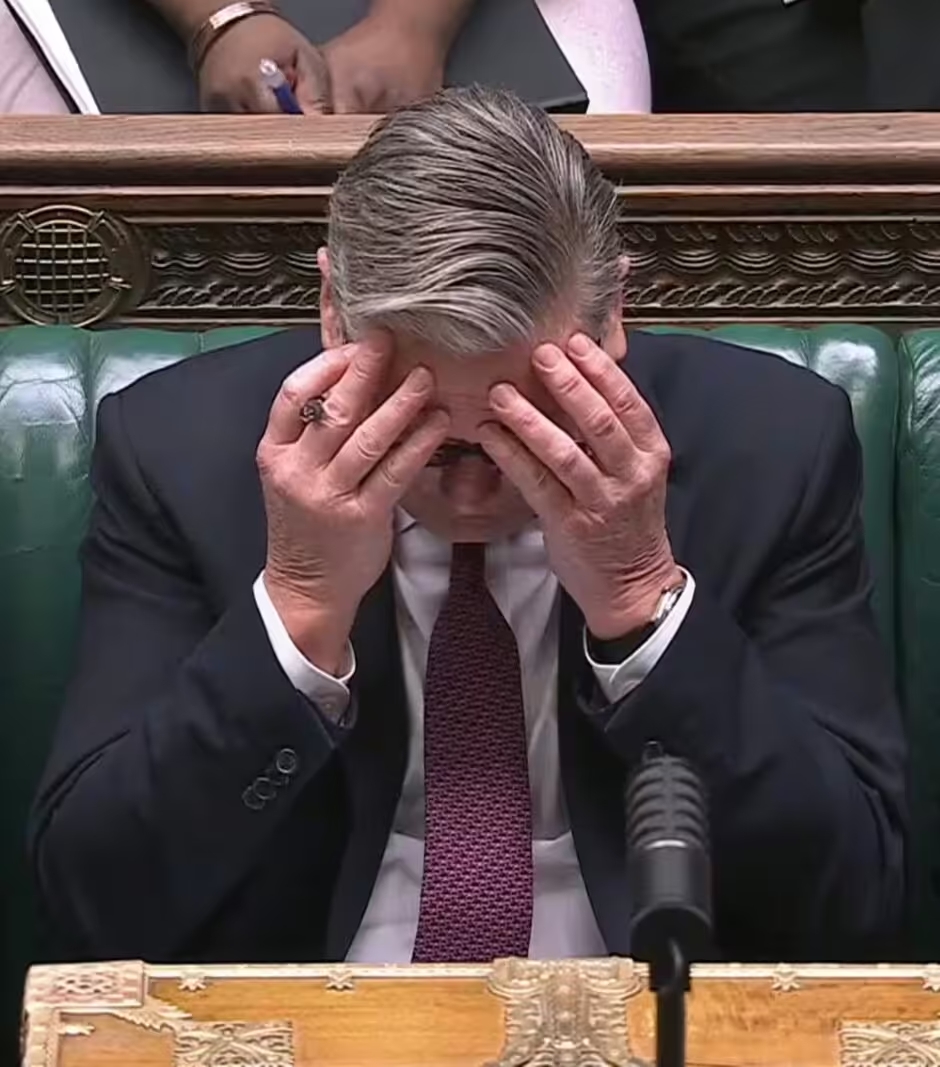
It is difficult to estimate the number of true believers or Islamist radicals as assessments vary, but the MI5 website gives a “SEVERE” rating for the UK’s current threat level due to the recent attack on the Jewish community by a Somali man given British citizenship. In Melbourne, Australia, a paramedic getting coffee was stabbed by a Mohamud Ali (a Somalian like the British attacker) in a random attack. How did that happen? For many years, in the West weak people have been holding public office. As for the UK, it has been devoid of leadership, and the Starmer regime consists of lacklustre nonentities without any empathy for their citizens or national heritage (other than sympathy for illegal migrants): like much of the West. The self-eviscerating death drive behind importing those whose teachings and laws urge them to overthrow and replace those who are not of their faith/ideology is unravelling the West in real-time. The defeat of Hungary’s Viktor Orbán signals the start of an acceleration in Europe’s decline for his successor is a staunch supporter of the EU, and is expected to release billions of euros in aid for the corrupt Zelenskyy regime in Ukraine. Open borders and allowing mass immigration are the next steps for Hungary which will then no longer have the safe, clean streets and cities it has had for some time: it will mirror the mess in much of Europe. Only Poland is standing firm against the madness of open borders by exercising strict border security with the possibility of Italy joining its ranks as a state committed to safeguarding its own national interest, culture and identity (which to any reasonable person would be regarded as necessarily the case for their country). Apart from the US in the West, the only other state taking a decidedly firm position on such matters is Japan. All three states are presently attempting to monitor closely Islamic activities, and exercise some form of control over its spread; Poland may have the strictest control in the EU over Muslim immigration: it takes seriously the need to safeguard its religious, social and cultural identity, and places a premium on security.
I am integrated [assimilated]. I am loyal to this country [UK]. I tell you why I’m loyal. I left Afghanistan 30 years ago and took asylum in this country. This country gave me everything: food, shelter, my family, my kids. I am indebted to this country, this country saved my life and provided me with everything. It’s my payback time from the heart. Even if I die [over this], no regrets. My family knows [why] if I die fighting for this country which saved us.
British Restaurant owner and activist Harman Singh Kapoor on being attacked for not selling Halal food in London.
Only recently, a Royal Air Force (RAF) cadet was suspended for sharing his views during a question-and-answer session that was part of the training. The unfortunate cadet, who was being prepared to be air force officer, responded during the session—exercising his reason—by stating that Islam was the UK’s greatest security threat. Extraordinarily, a probe has been launched into the youth’s comments, and he has been removed from the officer cadet course pending investigations. It must be noted that the cadet’s remarks are made in the context of stunning atrocities by Islamists in Britain: the London Underground bombings of 2005, killing 52 people; the 2017 Ariana Grande concert attack in Manchester, killing 22 people. All this in the wake of over 20 terror plots sponsored by the Islamic Republic of Iran since 2022; the government has even admitted that Iran’s threat towards the UK is ‘persistent and unacceptable’.
This incident led to retired rear admiral Chris Parry’s reaction to the cadet fiasco:
If I’d asked that question and got that answer I would have also asked the cadet to expand on his thinking and got some critical thinking going rather than suspend him…
Clearly Islamic extremism is the issue and not Islam, but how are young people expected to develop critical thinking around these complex issues if they are shut down in this way?
This is the fault of a system that is training its young people but not allowing them to express themselves and develop their thoughts. Any mature educational establishment should do just that…
If this cadet had answered ‘the Far-Right’ [or Christianity] I doubt he would have been suspended.
Despite Parry’s insightful comments, the truth remains that Islam-Sharia is necessarily in contradiction with Enlightenment ideals and the secularity that has come down to us underpinned by Judeo-Christian values. There are, of course, secular public spheres shaped by Hinduism, Taoism, Buddhism, Shintoism as well as the atheistic-materialistic principles of communist states. But it is clear that genuine Islam-Sharia is a totalising system, the conflation of state and religion, theocracies like Iran being the epitome of such a concept: they are anathema to Reason. These are constraints in the quest for learning and knowledge—if that process of learning and questioning casts doubt on fundamental tenets of Islam-Sharia. It is important to recall Milton who says all books should not have pre-publication censorship, that it is a risk but necessary for the pursuit of knowledge and wisdom. Hence, in his Areopagitica of 1644,
For books are not absolutely dead things, but do contain a potency of life in them to be as active as that soul was whose progeny they are; nay, they do preserve as in a vial the purest efficacy and extraction of that living intellect that bred them. I know they are as lively, and as vigorously productive, as those fabulous dragon’s teeth: and being sown up and down, may chance to spring up armed men. And yet, on the other hand, unless wariness be used, as good almost kill a man as kill a good book: who kills a man kills a reasonable creature, God’s image; but he who destroys a good book, kills reason itself, kills the image of God, as it were, in the eye.
For years, the U.K. has, with increasing vigor, been curbing what one is allowed to say, all in the name of fighting racism, sexism, Islamophobia, transgenderism, climate-change denial and whatever else the woke extremists conjure up…British police zealously examine social media messages and individual utterances for any deviation from the reigning woke orthodoxy. Police are making more than 30 arrests a day over what they deem to be offensive online posts, retweets or cartoons. That’s 12,000 arrests a year.
Steve Forbes, Chairman and Editor-in-Chief of Forbes Media. The land of Milton has fallen away from the freedoms that once made it great.
The murder of a human is to attack the reflection of the Divine, that which is endowed with Reason: clearly Reason is a quality of God. But to destroy a good book which is a vessel of Reason is an attack upon Reason itself, God’s image: a direct brutal assault on Reason, hitting it in a most vulnerable spot, the eye—that which sees, witnesses, provides access to learning, knowledge, wisdom. It is interesting that Reason is symbolically placed arguably at a higher level than human life: this abstraction may make some uncomfortable and perhaps it is the statement of an intellectual, but his point is that valorisation of human life reflects the highest aspects of the Divine in it—Reason, and that may set people apart from other life on earth. But the tragic truth is that so many refuse to acknowledge what they have within; they radiate the unreasonable, irrational, the insidious and openly harmful by being at war with Reason: shouting slogans, ranting, spewing hate, calling for the death of anyone who disagrees with them; the obsession of wanting to dumb everyone down to the lowest common denominator of derangement and venom; supposedly ‘progressive’ and ‘diverse’ ideas but deadly. If this is controversial, serious reflection is merited on the demands by certain beliefs that insist on the murder of ‘blasphemers’; but the ‘infidels’ often do not call for the destruction of texts that clamour for their death: for suppression of texts that are dangerous can at times also inure a society into being unaware of what is truly harmful.
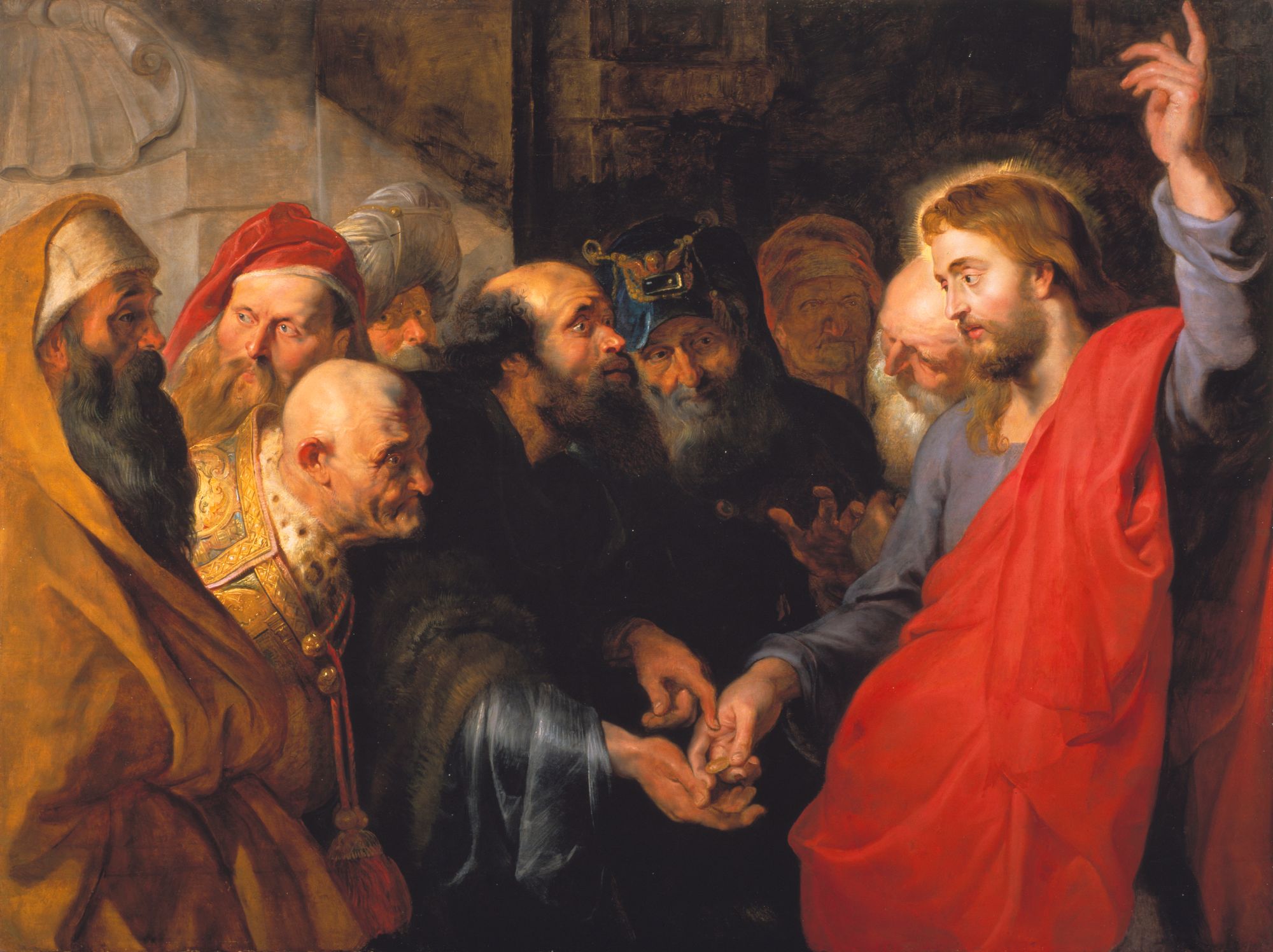
The quote from Matthew on ‘rendering unto Caesar’ is the clarification that must have been surprising at the time it was made: implying the separation between church and state; it is not the removal of Judeo-Christianity from society but by implication the creation of a socio-economic-political secular space—as we understand it today. The secularism of the West allows for ideas of Sharia-Islam, antithetical though they are to it. For disallowing debate and discussion of it is unproductive. The openness of this system even allows for the expression of it until via the use of Reason it becomes quite clear that in reality it can literally “spring up armed men” like the dragon’s teeth from Greek mythology: which rationally implies that something then needs to be done about it. But to be clear, Milton’s point is that to destroy/ban a book for disagreeing with it, especially when it is coherent, well-intentioned though controversial, is to cancel Reason itself; that Reason which is a gift and even a form of representation of the Divine, enhanced by free will: the basis of Kant’s moral autonomy as underwritten by Judeo-Christian values.
These fundamental differences in worldview can be seen today as the civilisational clash between America and Iran. The conflict was foreshadowed from the time of Thomas Jefferson and expressed best perhaps by his friend Thomas Paine (American political thinker, revolutionary and pamphleteer) who helped lay the philosophical foundations for the US Constitution: though the two had a difficult relationship affected by the latter’s criticisms of Washington, and his controversial, remarkable The Age of Reason (1794-1807)—wherein Paine attacked organised religion and the Bible. Still, Paine maintained his deist beliefs, for he did believe in God founded on rationality, the workings of nature (today called Intelligent Design), God as truly the ‘First Cause’: and that science is the rational means of understanding the Divine. As an authentic man of the Enlightenment he wrote The Age of Reason’s iconic lines: “My own mind is my own church”: indeed, Paine was much influenced by Milton. And within the Jefferson Memorial in Washington, D.C. are Jefferson’s memorable words from 1800: “I have sworn upon the altar of God eternal hostility against every form of tyranny over the mind of man”; his testament on separation of church and state, and government censorship over freedom of thought and speech; and Jefferson was also influenced by Milton. Given such fundamental Enlightenment ideas grounded on Judeo-Christian principles that forged the US Constitution it is necessarily the case that Sharia-Islam cannot co-exist in America: a securalised version is possible but that is not what the al-Haddad’s of the world promulgate.
This is where the Nuremberg trials prove their relevance. The question kept arising at the time why not find Göring and the other defendants guilty summarily, and sentence them to death. But due process was accorded even to members of the Nazi High Command to show if indeed death—as was expected by most—was to be the verdict; an example was needed for all to see that the world was in a period where the rule of law was in play. Even the semblance of justice was better than none. It was not meant to be a sham where process is but a calculated slowing down of justice, action was taken: war was waged against the Axis powers and vast destruction unleashed on the enemy, but there is a time for everything. As Ecclesiastes 3 says: “A time to kill, and a time to heal; a time to tear down, and a time to build”. The tremendous irony of the present is that two of the Axis powers Italy and Japan, together with Poland whose invasion by Germany led to World War II: form that band of brothers with the US in fighting against the prime threat to the West. These countries have learnt from the horrors of the past, but Germany who helped trigger two world wars has also fallen to the dangers of these times: it only recently seems to be waking up slowly to the reality it finds itself in. Germany disallows any Sharia or calls for creating a caliphate; but it is regressing as more non-White spaces are declared and given, in the case of a cafe: €662,000 in public funds. Britain, however, has an estimated 85-100 Sharia courts, and under Starmer has weakened considerably ties with the US over strategic and military matters; ties are further strained by its policy of Islamising the country.
The evils of war defy any legality even when reasons can be cited as casus belli. Yet with all the imperfections of men, especially men at war, the Israelis and Americans this moment have conducted to the best of their ability targeted strikes. This is in contradistinction to those who attack anyone they can within reach, killing their own citizens without compunction when they rise up against domestic tyranny, threaten the world by curtailing access to energy, attempt to build nuclear weapons that would be a means of global terror—for example, Iran. The extended process Trump employs through negotiations and the ongoing blockade despite the resulting difficulties and frustration it causes those who want swift results militarily—is an instance of the triumph of reason over mind-boggling hatred and death chants. A manual for war given the misnomer ‘religious text’ that demands blind obedience, and associated prophetic sayings that call for killing infidels and apostates: does not generate analytic options for thought or action. The reasoning underlying embarking on various steps to prevent further war with Iran until all feasible options are exhausted—before launching the coup de grâce against the injured serpent—is what a culture shaped by Enlightenment principles should engage in. Surprisingly, that still seems possible even in this time of decline for the West.
In the case of Göring, it was not clear he would be convicted as hoped when he used interpretations of instructions he gave his henchmen in letters produced as evidence at the trial as not tantamount to ordering the genocide of Jews, for his words were ambiguous in that regard. The evidence cited seemed to work against the prosecutors; Göring in defeat appeared to be getting the better of them for it came down to a matter of interpreting words that determined whether there were genuine orders given to exterminate Jews. This is the power of language. The scenario arose because Reason was given a chance; a high risk enterprise. But the secular, nor Christianity, is an excuse for inaction by the West in defending its values. It is not the purpose of Judeo-Christian values to either vote yourself into concentration camps, nor surrender to those who will enslave, force conversion, and murder you if you do not comply to their ‘religious’ code: so that there will be a negligible number of Christians left in the West. Reason will make clear, as the Trump administration understands, that the US and others western states will have to fight to ensure their survival against those who have declared that they want its destruction. ‘Turn the other cheek’ is not a call for suicidal empathy for nations and peoples.
The path of the downed aviator is beset on all sides by the iniquities of the selfish and the tyranny of evil man. Blessed is he who, in the name of camaraderie and duty, shepherds the lost through the valley of darkness, for he is truly his brother’s keeper and the finder of lost children. And I will strike down upon thee with great vengeance and furious anger those who attempt to capture and destroy my brother, and you will know my call sign is Sandy 1 when I lay my vengeance upon thee. Amen.
US Secretary of War, Pete Hegseth quoting a variation from Ezekiel 25:17 on strikes against Iran.
This is the price and danger of openness, the risk of (as Milton says) no pre-publication censorship, but it is necessary to show the strength of Reason prevailing ultimately. The possibility that Göring could escape the death penalty suddenly arose, but he was finally cornered—because of pride and ideological commitment, blind submission, arrogance, obedience to his so-called Führer—into an admission that brought him down. Despite claiming he knew for a fact about the genocide only upon being shown footage in court of concentration camps and their survivors as recorded by Americans who liberated the camps, undeniable visual evidence of the Final Solution that the other defendants also saw: Göring went on to state that he would still support Hitler—that was his undoing. The reasons behind allowing for the Nuremberg trials instead of summary executions for the captured Nazis were justified as the trials could be said to be a moral triumph for those who insisted on it. The ability to decide, to act: moral autonomy with all the dangers it brings is the human condition; and unpalatable as it is through the ages, this freedom to choose—is a gift from the Divine.[4]
Returning to the moment, the crisis at hand, what needs settling. All this explains, among other factors, the tensions that exist between the US and Iran. We witness the clash between Sharia trying to seep its way into a US that is hearkening back to its founding principles in strengthening national security and defence under the current Administration. This is not what critics of Trump want to hear, that at times result in ‘Trump Derangement Syndrome’ (TDS). This syndrome of irrational hatred and crazed attacks against Trump without the possibility of reasonable discourse is no longer a joke: there is a congressional bill directing the National Institutes of Health to conduct a study of this phenomena. But the approach adopted by the Administration trying to cut the Iranian Gordion knot is rational. Having met most objectives of Operation Epic Fury the US is trying to end further conflict and allow for the free flow of oil through the Strait of Hormuz, and not have Iran mining waterways or taxing vessels arriving for supplies; and an Iranian guarantee never to have any nuclear capability. The attempt to hold the world’s economies hostage through hostile moves in violation of international law—the very law Iran claims the US and Israel violate—reaffirms the absolute abjuration of rationality sealed within the regime’s religio-ideological mindset. This is further evidence that the Iranians would have held the world hostage with its nuclear weapons: thereby justifying the US-Israeli attacks against it. What else could be expected from a regime mired in chants of ‘Death to America’ and ‘Death to Israel’ as the grounding of its national policy?
However, what is unfolding by Iran’s intransigence in admitting defeat will make clear to the US that it will have to bite the bullet, and do what has to be done: there are rarely any sustainable reasonable outcomes from negotiations with those who cannot separate church from state, allow for the proper use of Reason, or sovereignty of the mind and the individual. The tragedy is that even with a ‘solution’ to the situation the problem will resurface in some form or other. Military might is crucial but the vicious assault upon Reason that has decimated the West in particular through misguided education, dishonest media, governing elites, declining Christian religiosity and spirituality, and excessive use of social media, etc. has led to its current sorry state of affairs. The greater danger is with the infiltration that has successfully taken place, and expansion in the West of creeping Sharia meant to be codified in certain states: this in truth delivers a series of blows equal to military attacks on the West from within, abetted by some of their own. The unfettered brutalisation of Reason may be the reason why years from now, when the history of this time is written it may be known as—How the West was Lost.
These are the times that try men’s souls…
Abraham Lincoln (1809-1865), “Lyceum Address”, 1838. Aged 28 then, he warned against a country that was lawless, and that those within the state through unbridled passions may cause their nation to “die by suicide”. Lincoln too was influenced by Milton.
To argue with a man who has renounced the use and authority of reason, and whose philosophy consists in holding humanity in contempt, is like administering medicine to the dead, or endeavoring to convert an atheist by scripture.―Thomas Paine (1737 -1809), The American Crisis (1776–1783). Paine was a revolutionary, Enlightenment thinker, and a Founding Father of America.
They were the pillars of the temple of liberty; and now, that they have crumbled away, that temple must fall, unless we, their descendants, supply their places with other pillars, hewn from the solid quarry of sober reason. Passion has helped us; but can do so no more. It will in future be our enemy. Reason, cold, calculating, unimpassioned reason, must furnish all the materials for our future support and defence.—Let those materials be moulded into general intelligence, sound morality, and in particular, a reverence for the Constitution and laws.
End notes:
[1] All quotes from “An Answer to the Question: What is Enlightenment?” are from: Kant, Immanuel. Toward Perpetual Peace and Other Writings on Politics, Peace, and History. Trans. David L. Colclasure. Yale University Press: New Haven and London, 2006.
[2] Author and Islamic scholar Robert Spencer states in his testimony to Congress:
Sharia based legal and civic institutions are contrary to America’s founding principles and violate federal law in numerous particulars. The death penalty for [saying] something impermissible about Allah or the prophet or Islam is blasphemy, [it] is directly at variance with First Amendment freedom of speech protections. The Islamic imperative to establish the hegemony of Sharia as the law of the land as in the Islamic Republic of Iran, Afghanistan and elsewhere is obviously at variance with the First Amendment principle of non-establishment of a religion….
A captured internal document of the Muslim Brotherhood details its programme for the United States where it says the brothers must understand that their work in America is a kind of grand jihad in eliminating and destroying Western civilization from within, and sabotaging its miserable house by their own hands with the hands of the believers, so that Allah’s religion is victorious over other religions.
Sharia is considered divine law and thus it takes precedence over all other legal systems…
You have for example Prince Al Waleed bin Talal from Saudi Arabia who has spent millions and millions of dollars in funding universities such as Georgetown where they have now the Prince Ali Center for Muslim Christian Understanding that is designed essentially to whitewash Islam, jihad and Sharia, and present a version of these things that are designed to foster complacency.

[3] A retired Royal Naval officer says: “We’re well aware of the Russian threat. The question is whether we’re doing something about it…[the UK is] hard-pressed [to maintain its security]…I don’t know how we are going to dig ourselves out of this nadir of maritime security that we have found ourselves in.”
[4] As Kant concludes in his essay on Enlightenment:
When nature has fully developed the seed concealed in this hard casing, to which it gives its most tender care, namely, the tendency and the calling to free thinking, then this seed will gradually extend its effects to the disposition of the people (through which the people gradually becomes more capable of freedom of action) and finally even to the principles of government, which find it to be beneficial to itself to treat the human being, who is indeed more than a machine, in accordance with his dignity.
The cultivation of Reason is a driving force in the positive evolution of humanity that ultimately leads to sovereignty of the individual, proper exercise of free will leading to proper moral judgement, people as autonomous beings: not automatons. Milton would agree soundly.
Texas Takeover
Britain’s Last Stand

[Featured picture credit: “The Triumph of Death”, Pieter Brueghel the Elder; top picture credit: Nuremberg, German poster.]
The writer is the founding editor of Philosophers for Change.
If publishing or re-posting this article kindly use the entire piece, credit the writer and this website: Philosophers for Change, philosophersforchange.org. Thanks for your support.
This work is licensed under a Creative Commons Attribution-NonCommercial-NoDerivs 4.0 International.


