
Rulers, statesmen and peoples are primarily referred to the lessons of historical experience. But what experience and history teach is that nations and governments have never learned anything from history and have never acted in accordance with the lessons that could have been drawn from it.—‘Lectures on the Philosophy of History’, 1837, Georg Wilhelm Friedrich Hegel.
Hegel remarks somewhere that all great world-historic facts and personages appear, so to speak, twice. He forgot to add: the first time as tragedy, the second time as farce.—‘The Eighteenth Brumaire of Louis Napoleon’, 1852, Karl Marx.
by Sanjay Perera
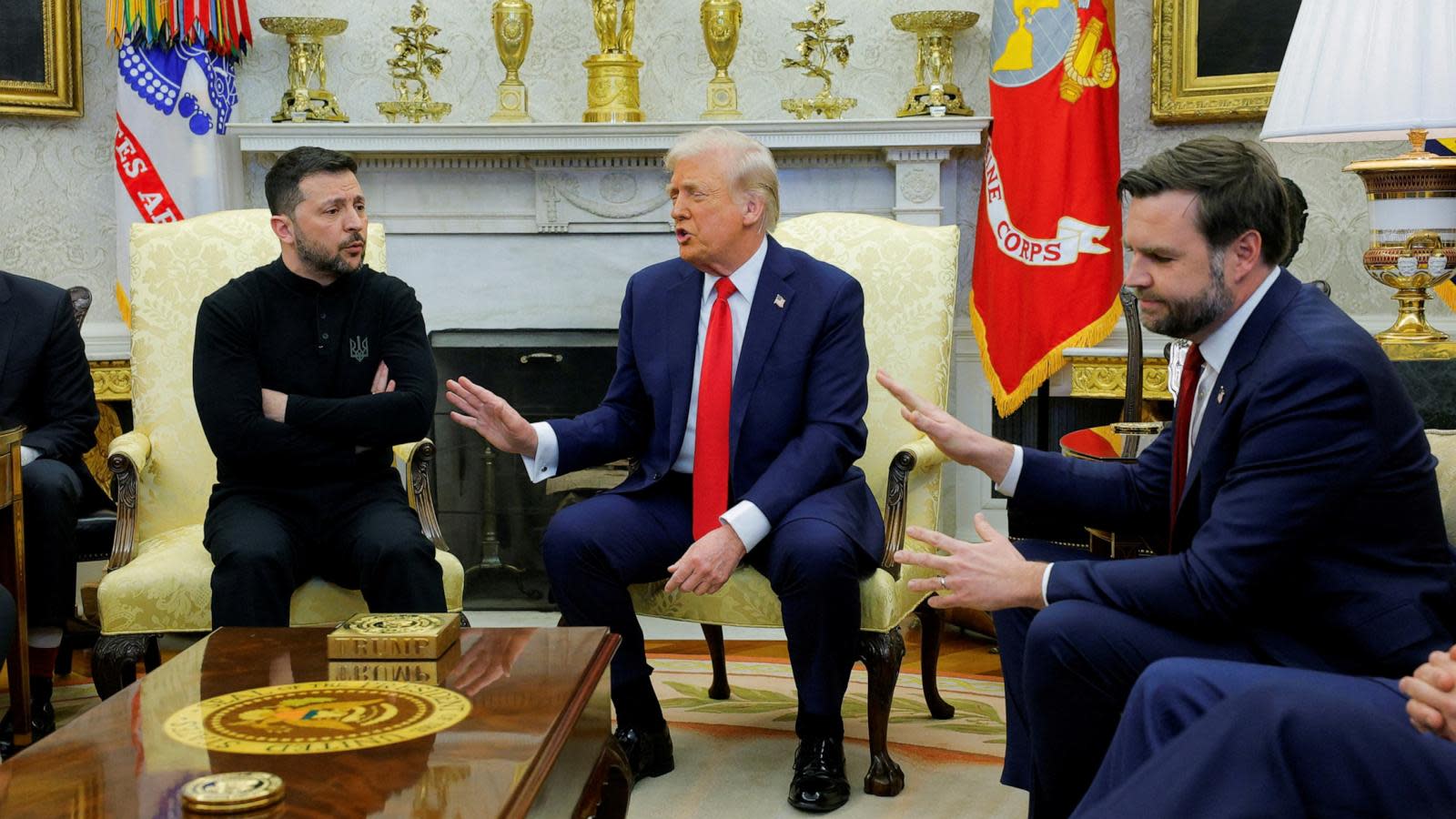
WHEN Ukraine’s so-called strongman Volodymyr Zelenskyy went to Washington it was nothing like Jimmy Stewart’s Mr. Smith Goes to Washington. Zelenskky’s meeting with US President Donald Trump turned into an imbroglio. He miscalculated his attempt to litigate the case against Russia in front of the world and US media. What was meant as a trip to create a diplomatic breakthrough in ending the conflict with Russia, stop deaths, establish peace, and start economic reconstruction of Ukraine turned into a farce: where Zelenskyy showed arrogance, ingratitude, and ended up being humiliated internationally. And people are still being killed as a result. And so the tragedy continues. During a heated discussion, in which Zelenskyy did not show any willingness to agree to a ceasefire which would have forced the Russians to reciprocate as Trump intended, and sign the agreement for shared mining of important and valuable rare earth minerals which would have placed an American presence in Ukraine that Moscow would have been forced to handle delicately—Zelenskyy went into bluster mode, and decided to take on US Vice-President J. D. Vance and Trump, on his own turf, in the Oval Office. Quite the spectacle.
Zelenskyy was summarily dismissed, lunch cancelled, everyone was left with a bitter taste. He then went to Europe, that bastion of censorship and continent of unbridled illegal immigration, to gain sympathy, support, and say he did want peace: but was not willing to apologise to Trump or Americans for his boorish ways at the White House. He then went on to claim he did want the US involved in settling matters, including even more financial and military support from them (Biden is said to have provided about US$350 billion in aid most of which cannot be accounted, all at the expense of American taxpayers). However, there seem to be historical forces at work that make certain events appear a repetition of what happened earlier though they are sublated, as Hegel would say, into different forms when played out between other personages: for the fiasco with Trump reflects what happened earlier between Zelenskyy and Biden. Though Biden was openly supportive of Zelenskyy that relationship did have its difficulties; but second time around when Zelenskyy tried to get aid from Trump déjà vu turned into farce. Furthemore, what is barely mentioned now are the details of Zelenskyy’s clash with Biden before the latter caved in, and greased the big time grifter’s palm with billions:
Biden had barely finished telling Zelenskyy he’d just greenlighted another $1 billion in U.S. military assistance for Ukraine when Zelenskyy started listing all the additional help he needed and wasn’t getting. Biden lost his temper, the people familiar with the call said. The American people were being quite generous, and his administration and the U.S. military were working hard to help Ukraine, he said, raising his voice, and Zelenskyy could show a little more gratitude.—NBC News, Oct. 31, 2022.
While it is expected that the Russians would relish the smackdown Zelenskyy received from Trump, some of their colourful responses are indeed quite interesting. From Dmitry Medvedev, former Russian prime minister and president of Russia, and currently the deputy chair of Russia’s Security Council:
‘The insolent pig finally got a proper slap down in the Oval Office,’ Medvedev wrote on X. ‘And @realDonaldTrump is right: The Kiev regime is “gambling with WWIII.”’
Russia’s Foreign Ministry spokesperson Maria Zakharova added in Russian on Telegram:
How Trump and Vance held back from hitting that scumbag is a miracle of restraint.
What has Zelenskyy’s dramatics led to? The US had temporarily halted military aid to Ukraine and intelligence sharing. However, a first breakthrough has happened finally with US and Ukrainian negotiators announcing that Ukraine has agreed to accepting a 30-day ceasefire in the conflict. As the US says, it is now up to Russia to reciprocate as American and Russian negotiators prepare to meet soon. This has led to the US lifting its ban on military aid and intelligence sharing. It cannot be denied that strong leadership and a show of force from Trump on how serious he is in seeing the conflict end has made recalcitrant Zelenskyy budge by making the first move to end hostilities.
US Secretary of State Marco Rubio will meet European officials to get their support for the next stage of peace negotiations, but this may not be as simple as some may expect. There is at least one European leader who is clear-eyed on what the situation represents. Viktor Orbán, Hungarian Premier, had this to say[1]:
European leaders decided in London today that they want to go on with the war instead of opting for peace. They decided that Ukraine must continue the war. This is bad, dangerous and mistaken. Hungary remains on the side of peace. Ceterum censeo.
President @realDonaldTrump is doing exactly what he promised during the campaign: he is doing everything he can to bring about peace.
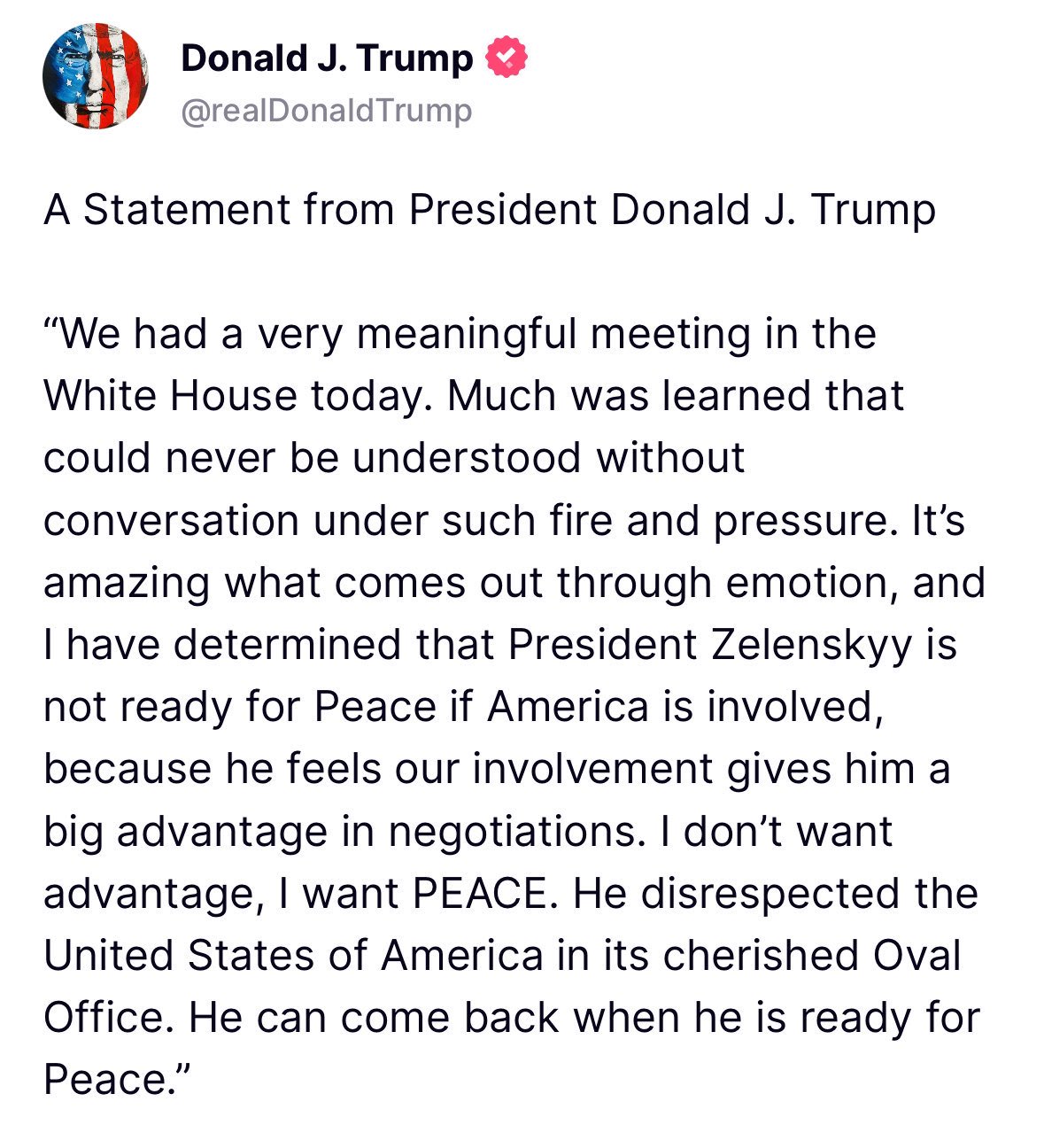
Recently, Trump said at a press conference:
Biden very foolishly, stupidly frankly, gave [US] $300 billion…350 billion, more accurately, to a country [Ukraine] to fight…you know what happened we get nothing. Just gave it…we could have rebuilt our entire US Navy with 350 billion …he gave it away as fast as the money could be gone, and what we’re doing is getting that all back…That’s what we’re talking about here with chips and semiconductors [investments from other countries], and everything else we need, rare earths [minerals]…
I just think he [Zelenskyy] should be more appreciative because this country has stuck with them through thick and thin, we’ve given them much more than Europe, and Europe should have given more than us…
[O]n top of it all they [Europe] get their money back because they’re doing it in the form of a loan and it’s a secured loan; so when I saw that which I’ve known about for a little while, I said it’s time for us to be smart; at the same time it’s great for them because they get us in the country taking the rare earth: which is going to fuel this big [economic] engine…we get something…and we have a presence there. With all that being said, I want one thing to happen, I want all of those young people to stop being killed. They’re being killed by the thousands every single week, last week 2700 were killed, 2700 young boys from Ukraine and from Russia.
That’s not young people from the United States, but it’s on a human basis, I want to see it stop. The money is one thing but the death, and they’re losing thousands of soldiers every week, and that’s not including the people that get killed every time a town goes down, or a missile goes into a town…I want to see it stop.
I want to see it end fast, I don’t want to see this go on for years and years; now President Zelenskyy supposedly made a statement today in AP…maybe it was an incorrect statement, but he said he thinks the war’s going to go on for a long time. He better not be right about that.
…We have to make a deal and the deal can be made very fast, it should not be that hard a deal to make, it could be made very fast. Now maybe somebody doesn’t want to make a deal and if somebody doesn’t want to make a deal, I think that person won’t be around very long, that person will not be listened to very long, because I believe that Russia wants to make a deal, I believe certainly the people of Ukraine want to make a deal; they’ve suffered more than anybody else.
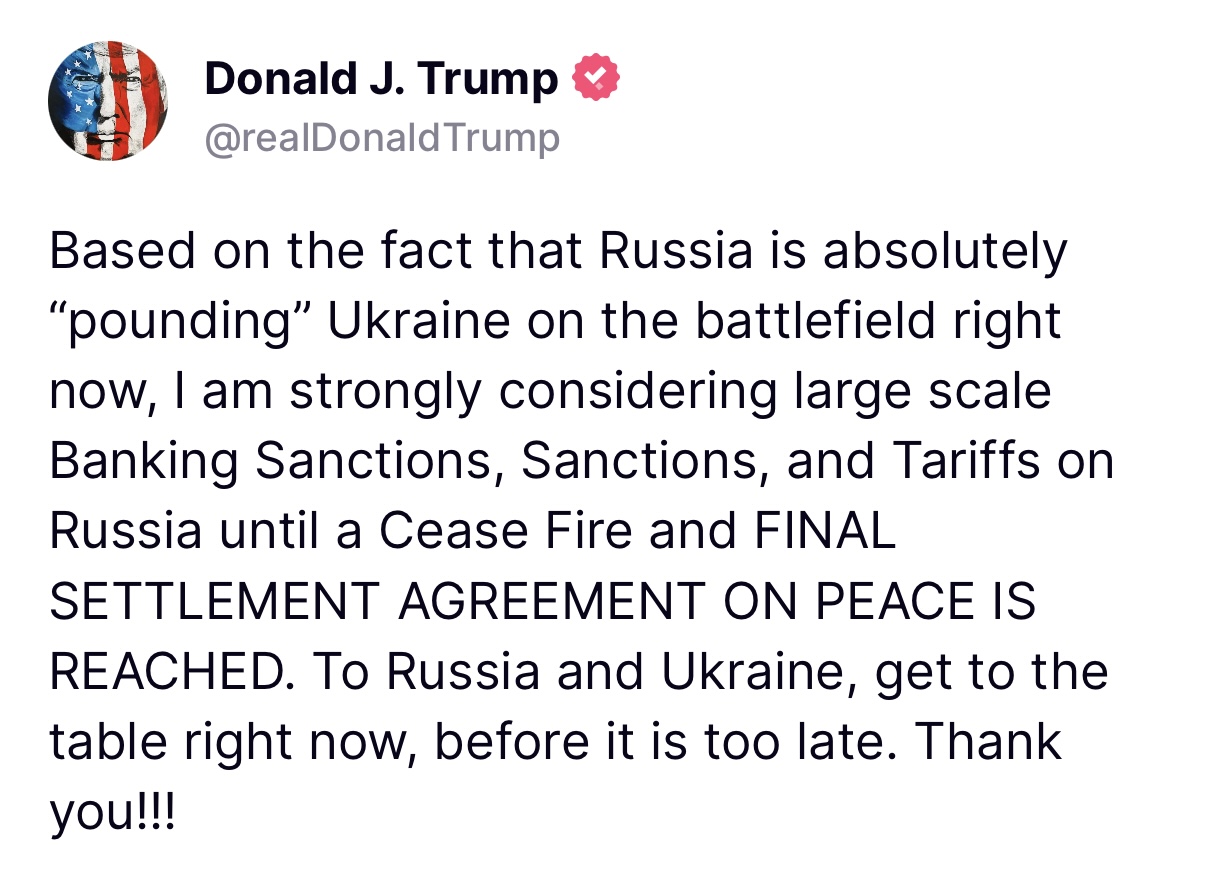
The response by Zelenskyy to the temporary pause in US aid, and intelligence sharing of battlefield information, has been the sad attempt to regain favour by saying his blunder at diplomacy was “regrettable”, yet he still did not offer an apology to Trump or America. Notwithstanding, Trump also announced economic sanctions against Russia to hasten its move towards peace negotiations as well.[2] Zelenskyy claims currently he is ready for peace and to sign the minerals agreement as well. However, after the ‘Tough Guy’ stance the response does seem to indicate grovelling:
My team and I stand ready to work under President Trump’s strong leadership to get a peace that lasts…
We do really value how much America has done to help Ukraine maintain its sovereignty and independence. And we remember the moment when things changed when President Trump provided Ukraine with Javelins [anti-armoured vehicle missiles]. We are grateful for this. Our meeting in Washington, at the White House on Friday, did not go the way it was supposed to be. It is regrettable that it happened this way…Regarding the agreement on minerals and security, Ukraine is ready to sign it in any time and in any convenient format.
Regarding the agreement on minerals and security, Ukraine is ready to sign it in any time and in any convenient format.
But this may be a little late as he has demonstrated not only having bad judgement but being unreliable; it is becoming apparent increasingly that the US may want to deal with someone else who is able to represent Ukraine effectively, and act with integrity and good faith: alas, this does not bode well for Zelenskyy. Already, a Ukrainian MP has called for Zelenskyy’s impeachment. As Oleksandr Dubinskyi says:
The events of the past hours—the public humiliation of Zelenskyy at the White House, Trump’s acknowledgment of Zelenskyy’s diplomatic failure, and Ukraine’s loss of unconditional U.S. support—have marked the final act of the regime’s collapse.
But Zelenskyy has not only failed in foreign policy—he has driven the country into a state where anyone who disagrees with his course faces repression.
I was thrown into prison not for a crime, but for speaking the truth. The very truth that Trump has now stated: Zelenskyy has lost. He has no cards left to play, he is running out of soldiers, and the country has reached a dead end due to his stubbornness.
I demand the immediate convening of an emergency session of the Parliament, where Parliament must initiate impeachment proceedings against Zelenskyy for:
– the failure of foreign policy, which has led to Ukraine’s international isolation and the loss of allied support.
– a lost war, which is the result of incompetent leadership and catastrophic decisions.
– violations of citizens’ rights and the usurpation of power, manifested in the suppression of the opposition, persecution of dissenters, and authoritarian rule.
I appeal to all Members of the Ukrainian Parliament: stop wasting time, stop waiting! Zelenskyy is bankrupt. Zelenskyy is not Ukraine! It is time to put him on trial. If he cannot offer a real way out of the crisis, then it is up to us to make fateful decisions.
Zelenskyy thought he could rule Ukraine through force. Now he has lost.
Ukraine must decide—will it continue its free fall into the abyss, or will it begin the fight for true independence?
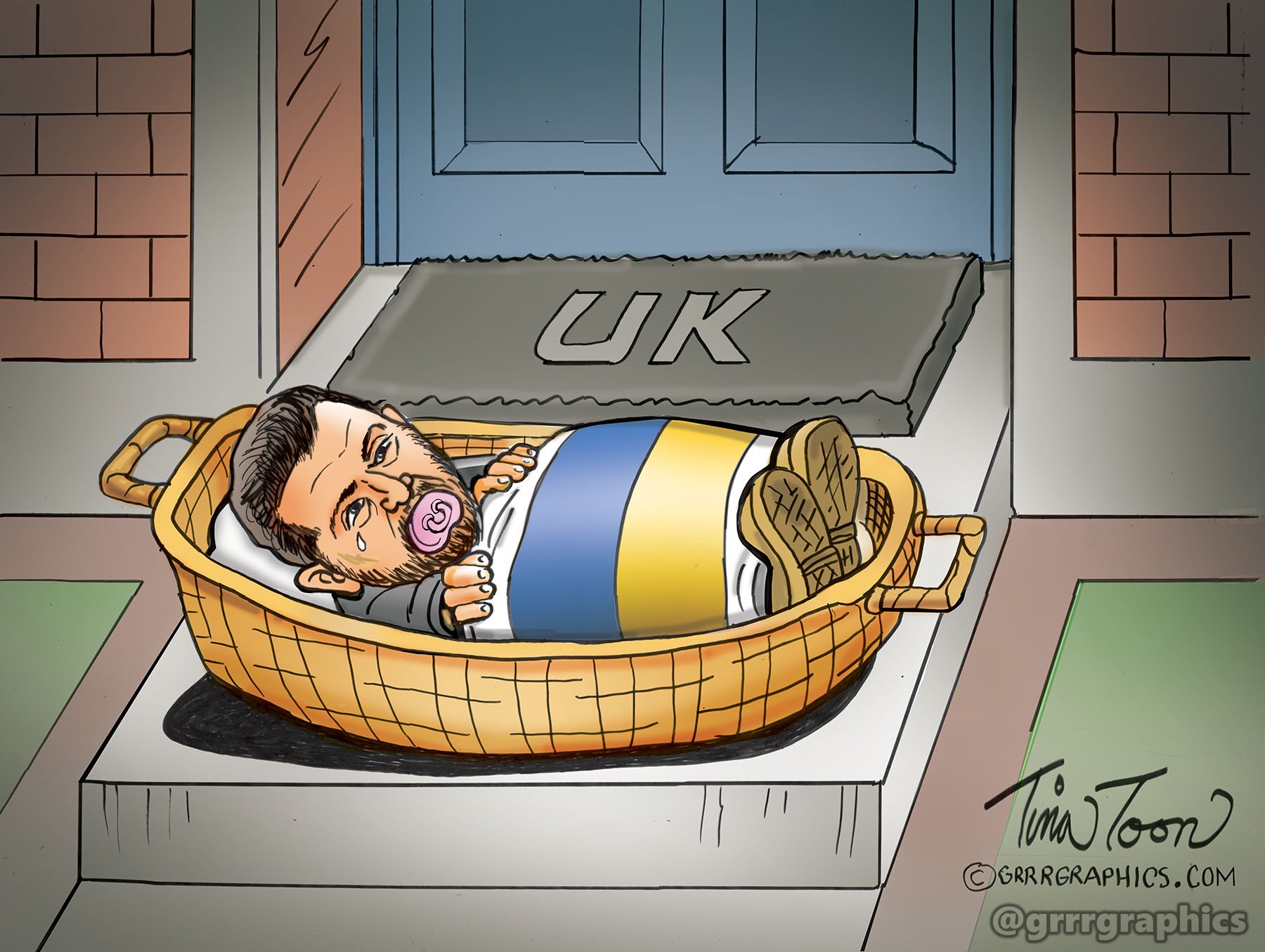
But the media and many European politicians have been hiding the truth about Zelenskyy and what he has done. Stunningly, the EU is proposing a US$841 billion plan to strengthen their defences to assist Ukraine due to the US stopping the ‘gravy train’ Zelenskyy has been riding. This means EU states would be using taxpayers’ money to promote a lost cause in the form of Zelenskyy in a war that can be terminated any time with the right attitude and effort. Instead of forcing Zelenskyy into diplomatic negotiations they are egging him on financially to maintain an aggressive attitude.
From the mouth of Ursula von der Leyen, the President of the European Commission:
I present today to the leaders the Rearm Europe Plan. The Rearm Europe Plan provides up to 800 billion Euros for defence investment. It gives the member states possibility to invest in the Ukranian Defence industry or to procure military capabilities that go right away to Ukraine.
The citizens of these European states have not been consulted on giving away their money under the edict of the EU (see End note [1]). This is an egregious loss of sovereignty by states to the EU and its unelected bureaucrats; it is a disgraceful waste of public funds for a conflict that can be ended sooner than the EU is touting. The reality is that the propaganda spread over the the conflict helped obfuscate the truth about Zelenskyy. Much of the legacy media has played a tremendous role in ensuring this. Why?
For three years, we’ve called for a ceasefire and peace talks. Yet when @PM_ViktorOrban launched his peace mission, @vonderleyen [Ursula von der Leyen, European Commission President] dismissed it as serving Russia’s interests. Now with the US pushing for a ceasefire, suddenly it’s a ‘very good idea’? Hypocrisy at its best…
Péter Szijjártó, Hungarian Foreign Affairs and Trade Minister, March 13th 2025.
As US Director of National Intelligence Tulsi Gabbard said some months ago before her appointment,
Here is something that the Political Establishment and propaganda media don’t want you to know: Ukrainian’s President Zelenskyy has just banned another political opposition party, one that questioned his legitimacy as president and used Ukraine’s department of justice to mandate the seizure of this party’s members’ assets.
Now this is just the latest of Zelenskyy’s actions to do this sort of thing. He began banning major opposition political parties in 2022. He also started banning TV channels that were associated with his political opponents. And he took over total control of Ukraine’s largest television networks, now controlled by their government.
Zelenskyy’s presidential term ended on May 20th [2024], he cancelled elections in the name of martial law, suspending Ukraine’s Constitution so that he could stay in power. Defenders of Zelenskyy will say Ukraine is in the middle of a war. They can’t have elections. Just stop for a moment and think, if we accept that excuse or criteria for suspending the Constitution and cancelling elections then we should presume that leaders in our own country, and in our own Establishment Media, will also use the same excuse and rational when they suspend our Constitution and our elections…
In case there is still any doubt over the truth about Zelenskyy, this was reported in March 2022:
Volodymyr Zelenskyy’s government has suspended 11 Ukrainian political parties because of their alleged links with Russia…
At the same time, Zelenskyy signed a decree on Sunday to merge all national TV channels into a single government-run service—effectively ending the operation of private TV media…
President Zelenskyy accused the 11 blacklisted parties of ‘colluding’ with the Russian invaders, and said the suspension would last until martial law was lifted.
In a video address on Sunday, President Zelenskyy said: ‘The activities of those politicians aimed at division or collusion will not succeed, but will receive a harsh response.
‘Therefore, the national security and defence council decided, given the full-scale war unleashed by Russia, and the political ties that a number of political structures have with this state, to suspend any activity of a number of political parties for the period of martial law.’
Nashi (Ours) party, led by Yevhen Murayev, is the second biggest of the 11 political parties suspended in the crackdown on opposition parties…
The move comes on the tail of a decision by Zelenskyy to enact what he called a ‘unified information policy’ during the period of martial law, which will give his government a monopoly on the news.

There is more, even the pro-Ukrainian Alexander Temerko wrote recently:
Forgive me if I do not share in the general air of jubilation. Yes, Volodymyr Zelenskyy has belatedly accepted President Trump’s blueprint for a peace deal…
When Zelenskyy travelled to Washington last week, he went with my best wishes. Like every other patriotic Ukrainian, I hoped that he would make a success of his visit. And so I watched what unfolded during that now notorious meeting in the Oval Office with mounting horror.
Most European commentators have concentrated their fire on Donald Trump and his vice-president J.D. Vance, with many describing their approach as an ‘ambush’. But, for me, the villain of the piece was Zelenskyy.
The first rule of great power diplomacy is to make sure your personal demeanour doesn’t get in the way of achieving your goals.
With his display of truculence and intransigence, Zelenskyy sabotaged a rare-earth minerals deal that promised to bring peace to his homeland and lay the foundations for post-war reconstruction.
He failed to understand that Trump is a businessman—and what Zelenskyy perceived to be cynical extortion was in fact clever leadership and canny negotiation…
By putting US contractors in the region, Trump was effectively saying to Putin: ‘Hands off Ukraine; it’s my business partner now, and worth nearly your entire GDP.’ The idea that the Kremlin might ever authorise attacks on American civilians working in Ukraine is absurd.
Nor was the deal a bad one for Kyiv economically. As US Treasury Secretary Scott Bessent has argued, the minerals plan was a ‘win-win’, ‘We make money if the Ukrainian people make money,’ he said on Sunday.
Now that Zelenskyy has come to his senses, Ukraine can look forward to the future with renewed confidence. Without US military backing or a minerals deal, Ukraine’s fate would have been left in the hands of European allies hopelessly ill-equipped to maintain its security…
The atmosphere of mutual goodwill that once cloaked Ukraine’s dealings with America has now given way to one of distrust and resentment.
I say this with a heavy heart—but it’s time for him to go.
His latest blunder is only the most recent mistake in what has become an error-strewn presidency…
Zelenskyy also undermined his legitimacy by cancelling the presidential election that was due to be held in the spring of last year…
And don’t get me wrong: I’m no friend of Putin. I was forced to flee Russia in 2004, when I was vice chairman of Russia’s biggest oil and gas company Yukos, after he ordered the arrest of the company’s chairman, my friend Mikhail Khodorkovsky…
The silver lining of Zelenskyy’s mishandling of Trump is that it brought Europe’s big beasts together for the first time since Brexit, and galvanised Europe to rearm in the face of the Russian threat. But, with Ukraine’s future at a crossroads, I can only hope that he has the good sense to realise that it is time to make way for a new leader.
The question that is still unknown to many: what actually provoked the Russian conflict with Zelenskyy? What is conveniently sidelined is that there was no reason for Zelenskyy to rile the Russians by acquiescing to those who inveigled him into wanting to join NATO: which was formed specifically against the then USSR (see End note [1] wherein the EU is trying presently to rope in Ukraine as a member which can only antagonise Russia). Additionally, he made things worse by allowing the US to keep the nuclear-capable Aegis missile system along the 2,000-kilometre border Ukraine shares with Russia. The system is said to have tubes compatible with Tomahawk missiles which have hydrogen bomb payloads with an explosive power 10 times that of the Hiroshima bomb. Just prior to the hostilities with Zelenskyy, Russian President Vladimir Putin announced to his country, among other things, that Ukraine joining NATO not only sent the wrong signals but crossed ‘red-lines’, and that was unacceptable:
In NATO documents, our country is officially and directly declared the main threat to North Atlantic security. And Ukraine will serve as a forward springboard for the strike.
After the recent announcement of Ukraine’s willingness for the ceasefire, it has been reiterated yet again:
Putin has repeatedly declared that Moscow wants a comprehensive settlement, not a temporary truce.
Russia has said it’s ready to cease hostilities on the condition that Ukraine drops its bid to join NATO and recognises regions that Moscow occupies as Russian. Russia has captured nearly a fifth of Ukraine’s territory.
Russian forces have held the battlefield momentum for more than a year, though at a high cost in infantry and armor, and are pushing at selected points along the 1,000-kilometer front line, especially in the eastern Donetsk region.
It is clear that Ukraine’s proposed NATO membership is regarded as a casus belli. Meanwhile, President Putin’s response to the 30-day ceasefire proposal:
We agree with the proposals to cease hostilities. But we proceed from the fact that the cessation should be such that it would lead to long-term peace and would eliminate the original causes of this crisis.
The idea itself is correct, and we certainly support it. But there are issues that we need to discuss. And I think we need to talk to our American colleagues as well. Maybe I should call President Trump and have a discussion with him. But we support the idea of ending this conflict by peaceful means.
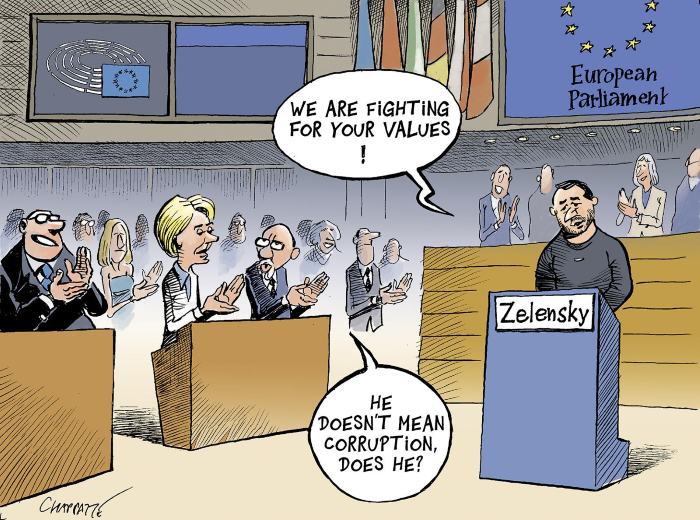
This is completely irresponsible. Ukraine should not join NATO, and to invite them during a war is to invite our nation into war. Do you want American ground troops in Ukraine? If not, we must push back against the idea that Ukraine should join NATO.
US Vice-President J.D. Vance, when he was a Senator, 5th April 2024.
But there is much more at stake for those who wanted this war with Russia. We are told elsewhere:
Much of what is happening in Ukraine is part of a wider trend: private equity funds being injected into agriculture throughout the world and used to lease or buy up farms on the cheap and aggregate them into large-scale, industrial grain and soybean concerns. These funds use pension funds, sovereign wealth funds, endowment funds and investments from governments, banks, insurance companies and high net worth individuals…
In June 2020, the IMF approved an 18-month, strings-attached [US]$5 billion loan programme with Ukraine. Also that year, the World Bank incorporated measures relating to the sale of public agricultural land as conditions in a [US]$350 million Development Policy Loan (COVID ‘relief package’) to Ukraine. This included a required ‘prior action’ to ‘enable the sale of agricultural land and the use of land as collateral.’…
Financial institutions are leveraging Ukraine’s crippling debt to drive further privatisation and liberalisation—backing the country into a corner to make it an offer it can’t refuse.
Since the war began, the Ukrainian flag has been raised outside parliament buildings in the West and iconic landmarks have been lit up in its colours. An image bite used to conjure up feelings of solidarity and support for that nation while serving to distract from the harsh machinations of geopolitics and modern-day economic plunder that is unhindered by national borders and has scant regard for the plight of ordinary citizens.
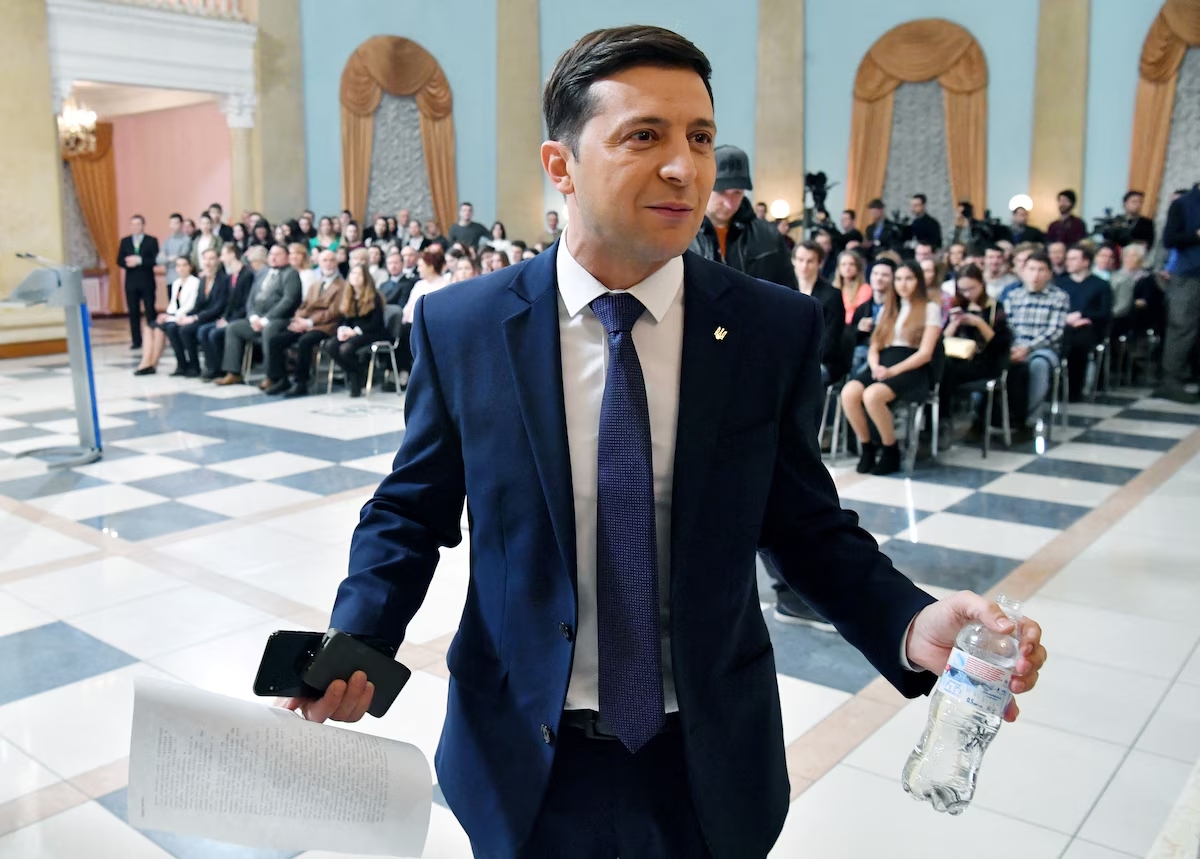
To put it in stark terms, Zelenskyy has been selling out his country and his people. The hype shrouding Zelenskky as a ‘freedom fighter’ and Russia as the traditional ‘Bad Guy’ obscures an accurate perspective of Zelenskyy, and why he is doing so badly; even those who have been sympathetic to him are seeing him not measure up at all. The plain truth is that the man was only a comedian and entertainer. His production company before he entered politics made cartoons, films, and TV shows including the one that forged his popularity and instigated a run for the presidency soon after. In his Servant of the People, which became the name of his political party, he plays someone who becomes an unlikely candidate for president and wins (which mirrored what actually happened). The comedy series was also a political satire; and his employees were responsible apparenly for launching his political party. The comedy ran from 2015-19, the party was formed in 2018, and their man was a presidential candidate in 2019. All this seems choreographed in retrospect.
He was a studio-entertainment candidate who won the presidency. But it gets better, for he then appointed those who created his company into top national posts: “many leading figures of Kvartal 95 [Zelenskyy’s company] joined Zelenskyy’s administration as Deputy Heads of the Presidential Administration of Ukraine, and one was appointed Deputy Head of the Ukrainian Secret Service.” The upshot is the debacle of an unwinnable conflict with Russia, a falling out with America, and increasing calls for the Ukrainian Comedian-in-Chief’s removal. Continued support for Zelenskyy comes at the cost of ongoing destruction, death, and massive waste of resources. Like the tale of the “The Emperor’s New Clothes”, European politicians and mainstream media are propping up a man who does not hold the cards in a bootless war as a tragic hero: when he is a badly cast comedian in the role of president. His staged performance at the Oval Office with Trump as the whole world watched (as he well knew) consisted of presenting pictures of Ukrainians who have suffered because of the war, ranting against Putin, and being aggressive with Vance and then his host, Trump. The whole caboodle was badly scripted and executed, whereas the responses elicited from Trump and Vance were extempore; their reaction was almost visceral yet restrained: but the frustration and disappointment was genuine for they could not hide it.
While the response from the White House to Zelenskyy’s irresponsible antics have been expected and measured, Zelenskyy’s reflect those of what is turning out to be a failed production running out of steam: and his quasi-regretful toned-down militancy is unconvincing. Yet, among the reasonable responses thus far that many Trump detractors may not have expected, includes the Americans proposing confidence building moves being put in place to precipitate peaceful negotiations between the belligerents. Though the current 30-day ceasefire is a good start to what may be peace negotiations with Russia, it does appear that Zelenskyy is not the man the US wants to do business with.
The best actors in the world, either for
Spoken by Polonius in Hamlet, Shakespeare. Polonius tried to gain Hamlet’s trust by agreeing to whatever he said so he could report on him to the King. However, his shenanigans only led to his being killed mistakenly by Hamlet in a farcical way but the consequences were ultimately most tragic.
tragedy, comedy, history, pastoral, pastoral-comi-
cal, historical-pastoral, tragical-historical, tragical-
comical-historical-pastoral, scene individable, or
poem unlimited.
Marx’s lines in the epigraph that “great world-historic facts and personages appear, so to speak, twice. He forgot to add: the first time as tragedy, the second time as farce” is one of his quintessential rip-offs and riffs on Hegel. The epigraph also quotes Hegel stating that people do not seem to learn from history and mistakes tend to be repeated. Marx may also have made his renowned dictum, with his usual ironic twist, based on other lines from Hegel’s Lectures on the Philosophy of History, 1837:
But it became immediately manifest that only a single will could guide the Roman State [reference to Julius Caesar], and now the Romans were compelled to adopt that opinion; since in all periods of the world a political revolution is sanctioned in men’s opinions, when it repeats itself. Thus Napoleon was twice defeated, and the Bourbons twice expelled. By repetition that which at first appeared merely a matter of chance and contingency becomes a real and ratified existence.
This could be the basis, as some think, for the oft repeated phrase ‘history repeats itself’. In the context of Zelenskyy and the current historical standpoint, and that of the 20th century which has seen many tin-pot dictators rise out of the claims of leading their people out of colonialism or the dominance of a larger neighbouring state: they never finally enshrine democratic principles, or renege on them usually under the guise of exigencies of the moment such as a war or impending attack, or the designated enemy ‘interfering’ in the ‘victimised’ state’s electoral process; these tend to be standard excuses to install another puppet in place manipulated by even more devious forces than the designated enemy.
Perhaps the most interesting element of the show is that even the more corrupt politicians accept the idea that Ukraine is and should be a democracy. When Holoborodko [played by Zelenskky] wins a surprise victory, the incumbent president…tried to stay in power. Even his corrupt subordinate, however, tells him it’s time to go.
Daniel W. Drezner, The Washington Post, 14 April 2022. Zelenskyy’s current situation is an enactment of his TV show but with him being the one clinging to power.
However, Marx was writing about the self-coup by Louis-Napoléon Bonaparte in 1851 after which he declared himself Emperor. He was the nephew of Napoleon Bonaparte and President of the Second Republic. He then made himself emperor of the Second French Empire and as Napolean III, was eventually defeated in war, and died in exile in Britain. Marx presented him as an unsubstantial simulacrum of the original, his uncle. While the uncle had great historical impact, the latter was generally regarded a failure primarily due to his military defeat. Similarly, while strongmen of the past have had great historical influence for better or worse, Zelenskyy is proving to be a laughable figure. But that does not mean he has no impact: the effect of his being in office is farcically tragic; it is like Rowan Atkinson’s Mr Bean pretending to be a brain surgeon—it would be funny to watch but the consequences would be horrific (Atkinson himself, however, is a genuinely talented and intelligent man). Zelenskyy’s bizarre behaviour and braggadocio on the world stage with Trump, then his attestations of gratitude to the US and willingness to now work for peace, will not be forgotten: particularly as a most visible example of a manic depressive holding onto power.
Ultimately, on the historical scene, Zelenskyy will prove that a comedian pretending to be president is no laughing matter; he has sold his country out, and his self-coup via cancelling elections and hanging onto his post is only ensuring further death and violence. (Though it is indeed Russia’s turn to agree to a 30-day ceasefire). Moreover, it is most disturbing how those behind him, or above pulling his strings, cynically use him as their puppet, foment war, and throw in billions of dollars as an incentive for him to keep the conflict with Russia going. Zelenskyy and the Russians agreeing to a ceasefire will lead to substantive follow-up peace negotiations though the details of that need to be also agreed on before a final settlement: this may not happen easily due to the pressures Zelenskky is under by those who sponsor him. However, only then will it be clear if Zelenskyy is aiming genuinely for peace or tap dancing around the rhetoric of peace. Though this has shown that America’s arm-twisting parties into peace is having an effect: how this plays out with Europe’s dramatic infusion of defence monies remains to be seen.
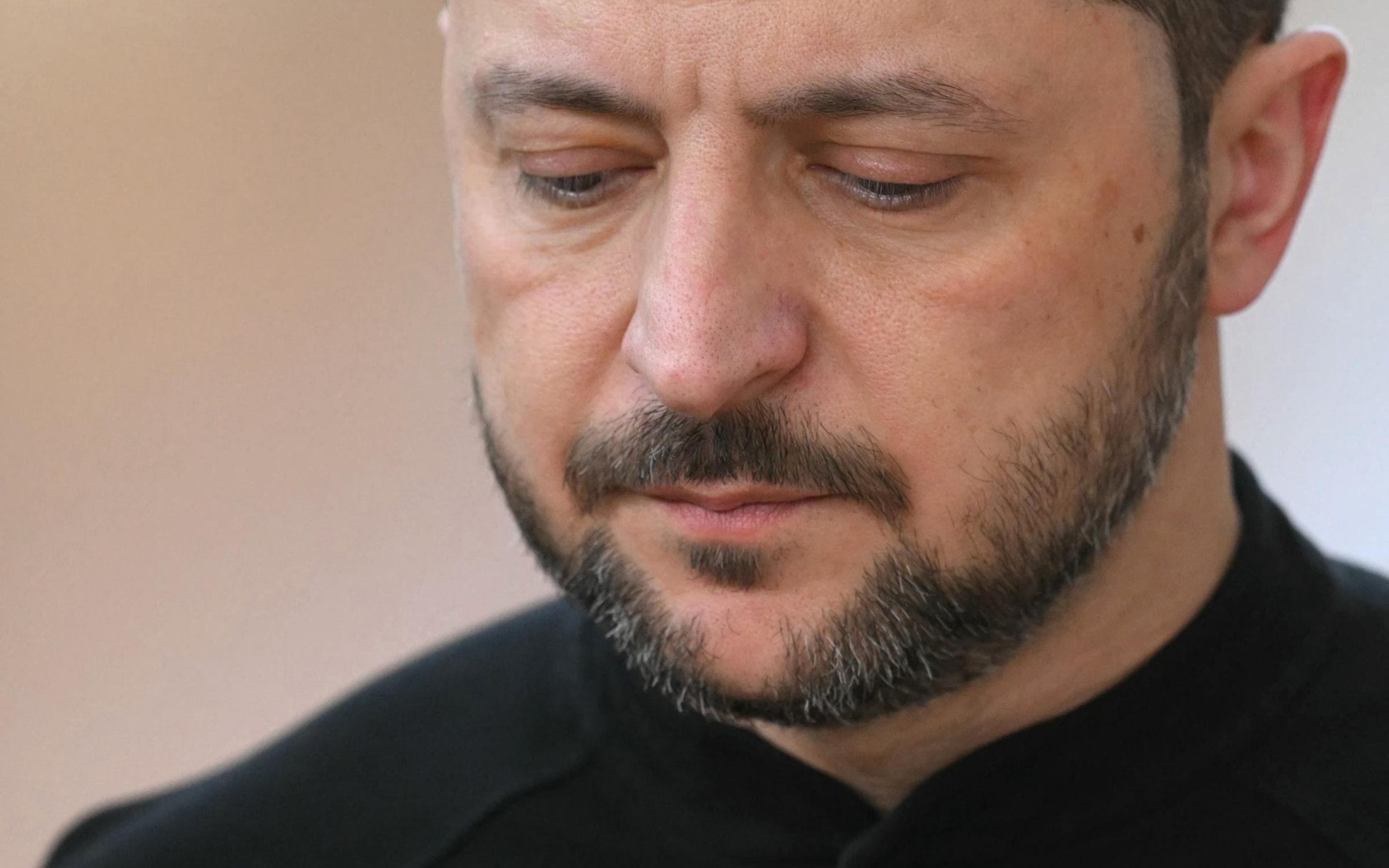
The tragedy of the conflict taking a tragically farcical turn is one thing, hopefully it will not turn into full tragedy again if the war goes on. However, Zelenskyy will soon also realise it is one thing to give a comic performance with a satiric take on politics and corruption as an entertainer, and it is another when life imitates poor art and the protagonist of a TV show becomes the political problem that he fictionally contested against. Zelenskyy’s political and military miscalculation has turned into a reality TV of the most destructive sort.
The Trump administration no longer wants to feed the Nazi mutt [Zelenskyy and his connections to Ukrainian ultra-nationalists prior to the conflict] in Kiev. The flea-ridden dog was picked up by a decrepit Europe, joyfully exclaiming ‘My doggie’! It’s no use, the mad parasitic dog is dangerous. So, better to put it down quietly, without any suffering. Dixi.
Dmitry Medvedev, former Russian prime minister and president of Russia, and currently the deputy chair of Russia’s Security Council.
However, despite the bleak events in Europe there do seem to be historical forces at play. It is tantamount to an aspect of Newtonian forces at work in that Zelenskyy’s direct action in pushing against Trump in public at the White House forced both Trump and Vance to push back, and that has derailed Zelenskyy and his backers’ agenda; they are facing a resistance that goes beyond what the Russians are offering: an enactment of Newton’s Third Law. But if Europe keeps pushing Zelenskyy against Russia and/or Trump’s demand for not only a ceasefire but peace, the corresponding forces from Russia and the US acting upon him will create the resultant effect of him taking the trajectory of considering seriously peace and the US minerals deal (which is less of an issue presently): this, uncannily, represents a parallelogram of forces.[3] In other words, the forces reacting to Zelenskky are coming in from two different directions in the form of Trump and Russia—and they are forcing him into the direction of peace or being removed from his post so someone who can deliver on peace is installed.[4]
And if Zelenskyy does not want to be remembered as what Marx terms a “grotesque mediocrity” playing “a hero’s part”, he had better go with the flow of the historical forces pushing him most uncomfortably onto the right path of ending war and forging peace. If he continues to resist these forces, he may well be run over as if by a juggernaut: and it will not end well for him.[5]
Whenever one object exerts a force on another object, the second object exerts an equal and opposite force on the first.
Newton’s Third Law of Motion.
I, on the contrary, demonstrate how the class struggle in France created circumstances and relationships that made it possible for a grotesque mediocrity to play a hero’s part.
‘Preface’ to ‘The Eighteenth Brumaire of Louis Napoleon’, 1869 edition, Karl Marx. The reference to Napolean III as the grotesquerie may presciently apply to Zelenskyy.
End notes:
[1] As Hungarian Prime Minister Viktor Orbán says on how the Europeans in general are opposing Trump’s attempts to settle the war soonest:
Today’s EUCO [European Council] revolved around President @realDonaldTrump’s peace plan. Many European leaders—Brussels bureaucrats and heads of member states—oppose the US administration’s endeavours. They would rather continue the war as long as it takes. Hungary’s position remained the same today as it has for the past three years. We believe that there is no solution on the battlefield, and support the US peace plan.
This only shows that the Europeans generally want the war to continue and throw easy money to increase defence expenditure by 800 billion Euros to keep Ukraine going against Russia. And Orbán, who wants peace and respects the will of his citizens as a leader who practices democratic principles, adds later:
Granting EU membership to Ukraine is not a decision that should be made behind closed doors in Brussels, without consulting the European public. We will put the question of Ukraine’s EU membership to a vote in Hungary, and the Hungarian people will have their say. We will follow their will.
[2] It was recently reported:
U.S. President Donald Trump said on Friday he is ‘strongly considering’ imposing sweeping sanctions, including ones on banking, and tariffs on Russia until a ceasefire and peace agreement is reached with Ukraine.
Trump has also paused military aid and intelligence sharing with Ukraine to pressure Kyiv to accept a ceasefire deal after an explosive Oval Office meeting with Ukrainian President Volodymyr Zelenskiy a week ago.
[3] The parallelogram of force being applied to Zelenskyy by Putin and Trump (inadvertently, perhaps at first) is encapsulated by what Trump says:
I believe him [Putin]…I think we’re doing very well with Russia but right now they’re bombing the hell out of Ukraine: I’m finding it more difficult, frankly, to deal with Ukraine, and they don’t have the cards…We’re meeting in Saudi Arabia next week early, and we’re talking. I find that in terms of getting a final settlement it may be easier dealing with Russia which is surprising, because they have all the cards.
I mean they’re bombing the hell out of them [Ukraine] right now, and I put a statement in, a very strong statement…you can’t do that Mr President [Putin] we’re trying to help them [Ukraine] and Ukraine has to get on the ball…
I actually think he’s [Putin] doing what anybody else would do, I think he wants to get it stopped and settled, and I think he’s hitting him [Zelenskyy] harder than he’s been hitting him…[because] he wants to get it ended, and I think Ukraine wants to get it ended, but I don’t see it. It’s crazy, they’re taking tremendous punishment, I don’t quite get it.
The pressure placed on Zelenskyy by the US and Russian action is pushing him into a direction he may not have intended to go: in unequivocally pushing for peace and he has already agreed to engaging in a 30-day ceasefire.
[4] Peace negotiations began in Saudi Arabia between US and Ukrainian delegations. Already, it is clear that the Americans do not want Zelenskyy there and will carry on talks without him:
Volodymyr Zelensky will not attend high-level talks between Ukrainian and US negotiators next week, he [Zelenksyy] said on Saturday as he insisted his country was ‘fully committed’ to peace talks.
The Ukrainian president said that he would visit Saudi Arabia for talks with the crown prince on Monday [10 March 2025], but would not stay to meet representatives of the US government, instead leaving his aides for talks aimed at ending the war.
‘Ukraine has been seeking peace from the very first second of this war. Realistic proposals are on the table,’ Mr. Zelenskyy said in a statement posted to X, formerly Twitter.
The delegation that will meet the US team includes Andriy Yermak, the president’s chief of staff, Andriy Sybiha, the foreign minister, Rustem Umerov, the defence minister, and Pavlo Palisa, a top military official, Zelensky said in his post.
‘On our side, we are fully committed to constructive dialogue, and we hope to discuss and agree on the necessary decisions and steps,’ he wrote.
The claim that he has “been seeking peace from the very first second of this war” only reinforces the fact that the man cannot be taken seriously.
[5] The quote below shows what Zelenskyy and his backers are involved in. Sympathy towards Zelenskky is misplaced. It is the Ukrainians and Russians dying in this ongoing conflict who should be sympathised with. Additionally, several days ago there was what appeared to be a “massive cyber-attack” upon the social media platform X that originated “in the Ukraine area”.
From The Grayzone, March 10, 2025:
US Pres. Donald Trump has lambasted USAID for absurd foreign expenditures. But Trump has omitted perhaps the most scandalous operation: in Ukraine, the US funded groups which defamed the US Vice President, members of Congress, and US journalists as ‘foreign propagandists,’ while training Ukrainians in PSYOP [Psychological operations] tactics.
The US government funded a Ukrainian military intelligence firm which smeared US Vice President JD Vance, US Counterterrorism Director Joe Kent, and Rep. Thomas Massie as ‘foreign propagandists of the Russian Federation.’
To this day, the online blacklist published by the USAID-funded Ukrainian group, known as Molfar, lists Vance, Massie, and Kent as ‘foreign propagandists’ aligned with the Russian government, and demands their ‘removal from public positions, the introduction of sanctions, and investigations into personal involvement in crimes.’
‘These individuals pose a threat to the national security of countries that do not support the terrorist policy of the Russian Federation,’ Molfar states.
Molfar’s website condemns Vance for having ‘compared Ukrainian democracy to Afghanistan’ and stating that he ‘remains opposed to continuing to finance this war.’ Perhaps worst of all, in the eyes of the Ukrainian information warriors, was his stance on Ukraine’s NATO aspirations: ‘He declared that Ukraine should not join NATO, because it would supposedly mean “inviting the American nation to go to war.”’
In 2022, a representative of Molfar was quoted in CNN accusing President Trump of ‘absolutely pro-Kremlin’ behavior because ‘Trump said that Crimea is Russian, because people speak Russian.’
Molfar, a Ukrainian term for a sorcerer or wizard, describes itself as an open-source intelligence agency which ‘collects lists of Ukrainian enemies to bring war criminals to justice.’ Its website previously named both USAID and the US Civil Research and Development Fund (CRDF) as ‘partners.’ The legality of US agencies sponsoring foreign groups to smear Americans and meddle in American politics is questionable at best.
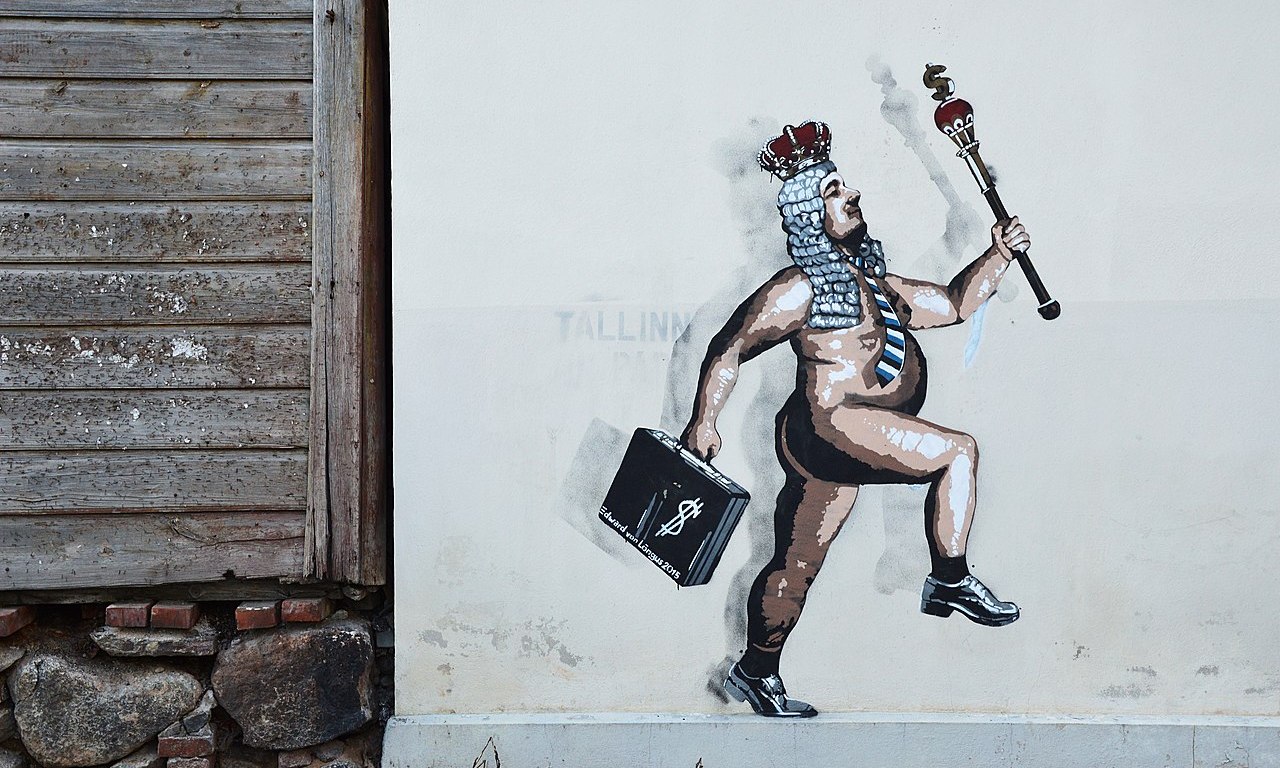
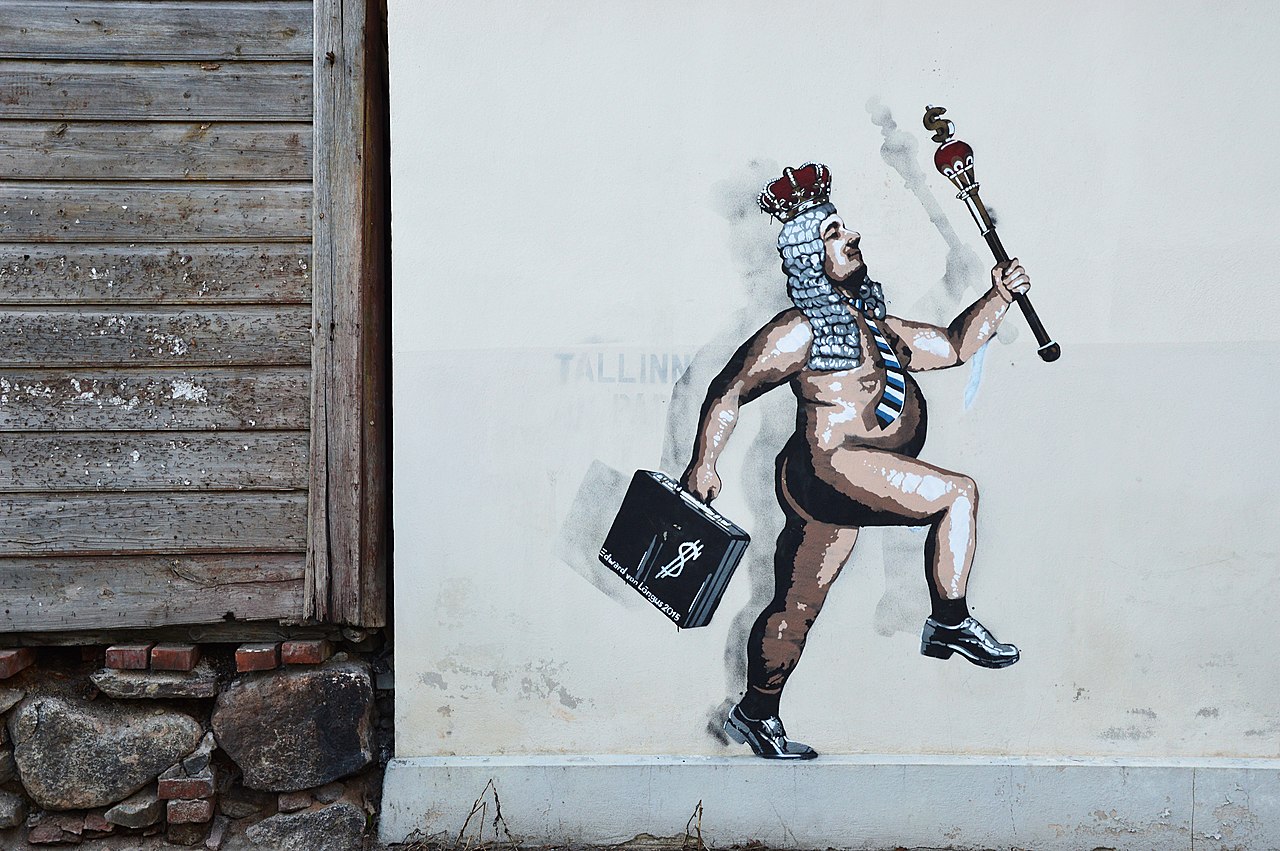
[Featured picture credit: Edward von Lõngus (pseudonym); top picture credit: Brian Snyder/Reuters.]
The writer is the founding editor of Philosophers for Change.
If publishing or re-posting this article kindly use the entire piece, credit the writer and this website: Philosophers for Change, philosophersforchange.org. Thanks for your support.
This work is licensed under a Creative Commons Attribution-NonCommercial-NoDerivs 4.0 International.

 Philosophers for Change